Paul Morello
Dynamic pricing is the practice of changing a product’s price automatically in response to real-time signals — demand, supply, competitor prices, time, and more — rather than leaving it fixed. It’s why an Uber costs more in the rain, a flight jumps the week before you fly, and the same item on Amazon can wear three different prices in a day. Also called surge, demand-based, or real-time pricing, it’s one of the highest-leverage tools in modern commerce. After fifteen years pricing products in ecommerce and retail, I can tell you the shift from static to dynamic pricing is the single biggest margin lever most businesses still haven’t pulled.
This guide covers what dynamic pricing is, how it works, its types, real examples, its benefits and challenges, and how to implement it.
What you’ll find in this guide
- What is dynamic pricing?
- How does dynamic pricing work?
- Types of dynamic pricing
- Dynamic pricing examples
- Benefits and challenges
- How to implement dynamic pricing
- Frequently asked questions
What is dynamic pricing?
Dynamic pricing is a strategy where prices adjust automatically based on current market conditions, instead of staying fixed on a shelf. The price reflects what’s happening right now — how much demand there is, what competitors charge, how much stock is left, even the time of day — so a business can capture more value when demand is high and stay competitive when it isn’t. It’s the opposite of static pricing, where you set a number and leave it until you manually change it. Far from new, dynamic pricing has powered airlines and hotels for decades; software simply brought it within reach of every online store.
How does dynamic pricing work?
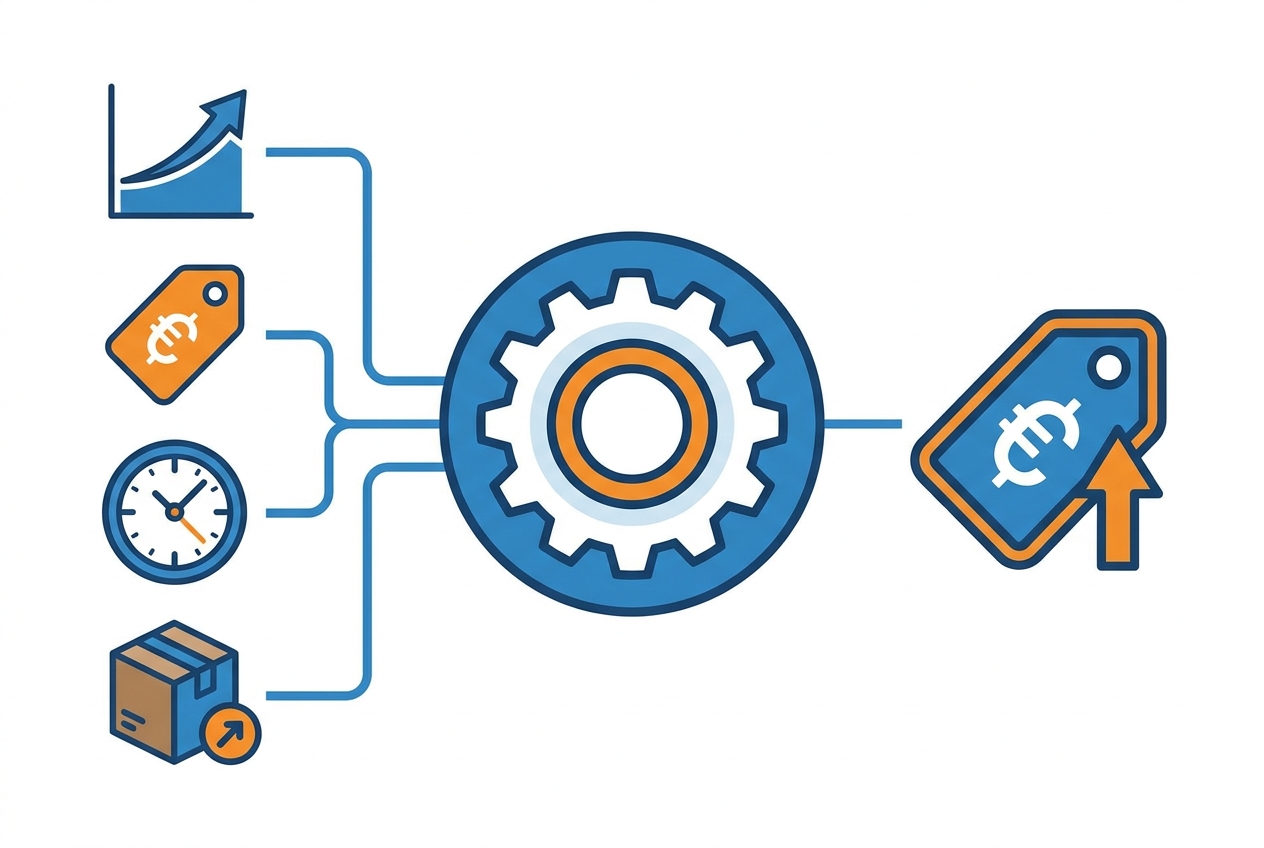
At its core, dynamic pricing turns a set of signals into a price, continuously. A pricing engine watches inputs like these and applies rules (or algorithms) to reprice:
- Demand — prices rise as interest surges and ease when it cools.
- Competitor prices — the single most actionable signal in ecommerce; your price moves relative to the market.
- Stock and supply — scarcity pushes prices up; overstock pulls them down.
- Time and season — peak periods, holidays, and time-of-day patterns.
The crucial part is the rules: good dynamic pricing isn’t a black box changing prices at random, but a set of boundaries you define — never below a margin floor, never above a ceiling, always within a band of the competition — enforced faster than any human could.
Types of dynamic pricing
“Dynamic pricing” is an umbrella over several related approaches. The most common:
Dynamic pricing examples
The strategy is easiest to grasp through the businesses built on it:
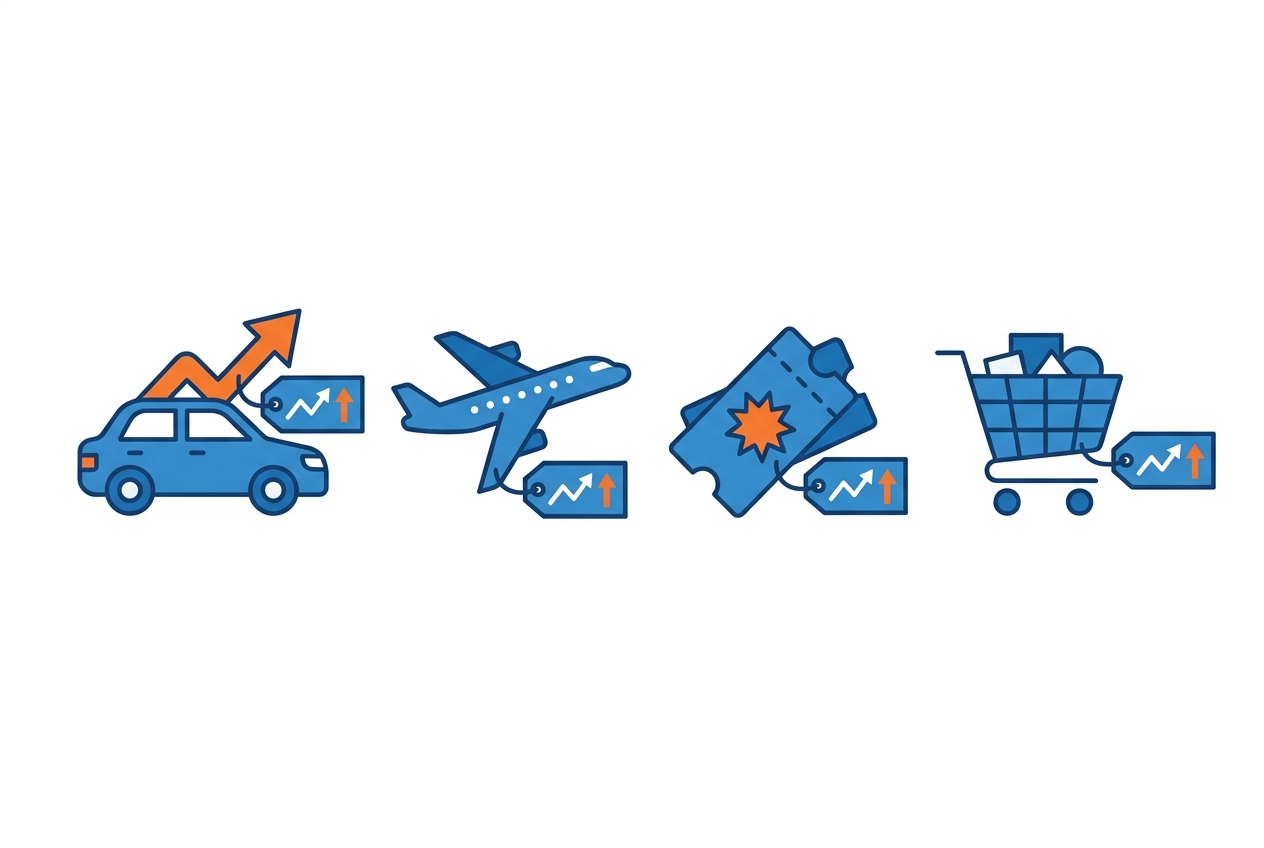
- Ride-hailing — Uber and Lyft raise fares when demand outstrips available drivers, the textbook case of surge pricing.
- Airlines & hotels — fares and room rates shift constantly with demand, timing, and remaining capacity; the discipline of yield management.
- Live events — Ticketmaster and others price popular concert tickets dynamically as demand spikes, which is where most people first met the term.
- Ecommerce — Amazon changes prices across millions of products many times a day based on demand and competitor moves. Our deep-dive on how Amazon uses real-time data and dynamic pricing breaks that machine down.
Benefits and challenges
Dynamic pricing is powerful, not free of trade-offs. The balance:
The through-line on the challenges is control: dynamic pricing goes wrong when it’s unbounded. Set with sensible floors, ceilings, and change limits, it protects both margin and trust. This is where it differs from other pricing strategies — it’s not a different philosophy so much as a faster way to execute one.
How to implement dynamic pricing
You don’t need to be Amazon to price dynamically. It comes down to three things:
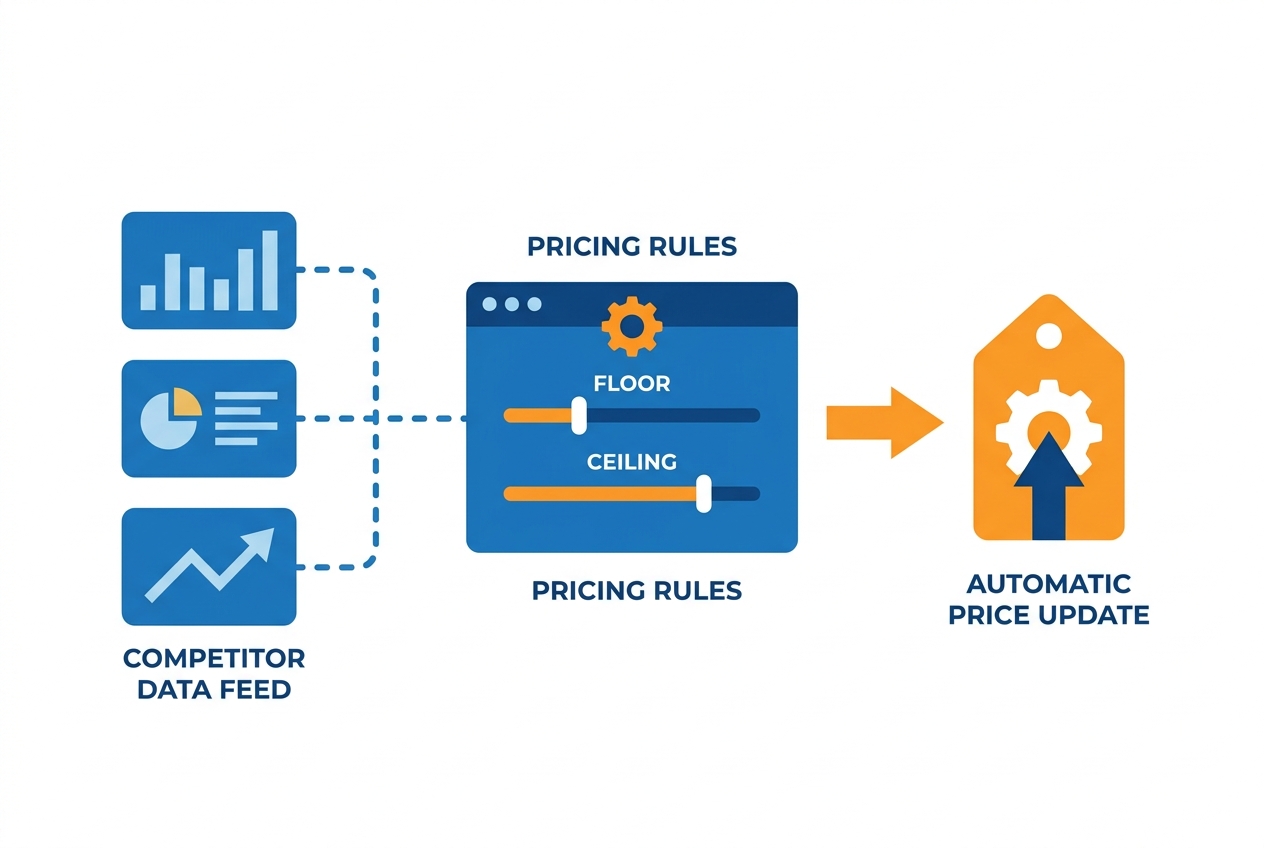
- Data. Above all, current competitor prices — the signal that changes most and matters most. Most sellers monitor competitor prices automatically to feed the engine.
- Rules. Define your floors, ceilings, and how you want to sit relative to the competition — the boundaries the engine enforces.
- Automation. Software applies those rules across your catalogue continuously, so prices stay optimal without manual work.
That’s exactly what a dynamic pricing tool does — turning competitor data and your rules into automatic repricing — with price intelligence giving you the market context behind every move.
Frequently asked questions
What is dynamic pricing?
Dynamic pricing is a strategy where prices change automatically in real time based on signals like demand, competitor prices, stock, and timing — rather than staying fixed. It’s also called surge, demand-based, or real-time pricing.
What is an example of dynamic pricing?
Uber’s surge pricing is the classic example: fares rise when demand for rides exceeds available drivers. Airlines, hotels, Ticketmaster, and Amazon all use dynamic pricing too.
What are the types of dynamic pricing?
Common types include demand-based (surge) pricing, time-based pricing, competitor-based pricing, yield/capacity-based pricing, and segmented pricing.
What are the benefits of dynamic pricing?
It captures more margin when demand is high, keeps you competitive as the market moves, lets you react in real time, and helps clear overstock or protect scarce inventory.
Is dynamic pricing legal?
Yes, dynamic pricing based on demand, timing, and competition is legal and widespread. It becomes problematic only if it crosses into unlawful practices like price fixing or discrimination on protected characteristics.
However you approach it, dynamic pricing lives or dies on the quality of your market data. When you’re ready to feed it with real-time competitor prices, price monitoring software keeps that picture current.