Andrea Cramer
MAP monitoring is the practice of tracking the prices retailers advertise your products at, so you can catch anyone promoting below your Minimum Advertised Price and act on it. For a brand or supplier, it’s how a MAP policy goes from a document nobody reads to a rule that actually holds. After fifteen years watching brands try to defend their pricing across dozens of retailers and marketplaces, I can tell you the ones who succeed all have the same thing in common: they don’t check by hand, they monitor automatically.
This guide covers what MAP monitoring is, why it matters, how it works, what to look for in MAP monitoring software, and how to enforce compliance.
What you’ll find in this guide
- What is MAP monitoring?
- Why MAP monitoring matters
- How MAP monitoring works
- MAP monitoring software: what to look for
- How to enforce MAP compliance
- Frequently asked questions
What is MAP monitoring?
MAP monitoring is the process of continuously checking where and how your products are advertised, and flagging any retailer promoting a price below your Minimum Advertised Price. A MAP policy sets the floor on the advertised price; MAP monitoring is how you find out when that floor is broken. If you’re new to the underlying policy, our guide to what MAP pricing is covers the definition — this article is about the practical job of enforcing it.
A quick example: if a manufacturer sets a MAP of $150 for a pair of premium sunglasses, retailers can advertise them at $150 or above, but not below. A retailer promoting them at $129 is in violation — and MAP monitoring is what surfaces that $129 listing among thousands of others.
Why MAP monitoring matters
Without monitoring, a MAP policy is unenforceable — and an unenforceable policy invites exactly the behaviour it was meant to prevent. The stakes:
- Price erosion. One retailer advertising below MAP pressures the others to follow, and a downward spiral drags the product’s whole market value with it.
- Brand damage. Constant discounting makes a premium product look cheap and trains customers to wait for the lowest price.
- Marketplace chaos. Platforms like Amazon are especially prone to violations, where third-party sellers cut advertised prices — sometimes unknowingly — to win the sale.
- Channel conflict. Compliant retailers resent competing against violators, straining the relationships a brand depends on.
How MAP monitoring works
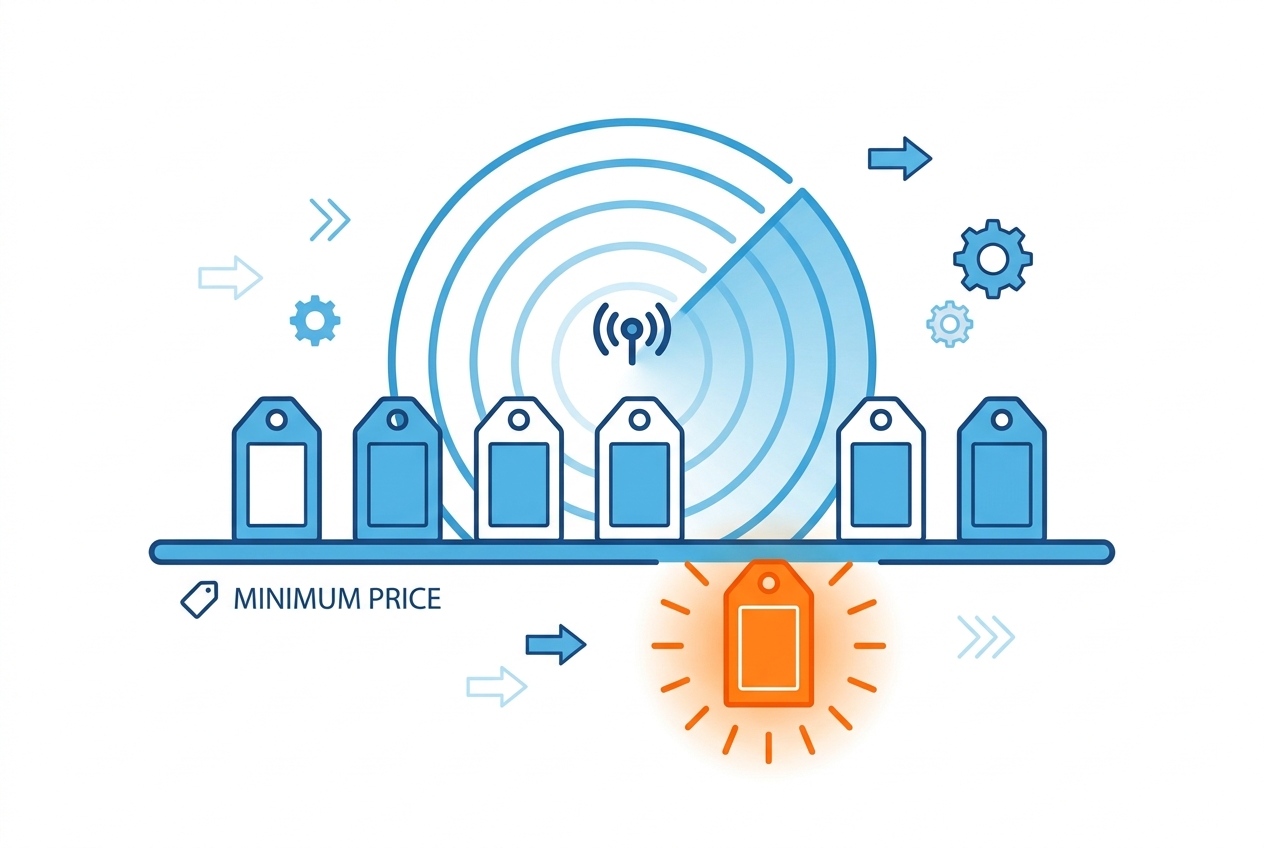
Effective MAP monitoring runs on a simple loop, executed at a scale no human can match:
- Track advertised prices. Software continuously scans your products across retailer websites and marketplaces, capturing the price each one is advertising.
- Compare against MAP. Each advertised price is checked against your MAP floor for that product.
- Flag violations. Any listing below MAP is flagged, with the seller, the price, and where it appeared.
- Alert and act. You’re notified in time to respond while the violation still matters — not weeks later.
This is the same underlying capability as competitor price monitoring: continuously watching prices across the market and flagging the ones that matter. MAP monitoring simply points that capability at your own products and your MAP floor instead of at competitors.
MAP monitoring software: what to look for
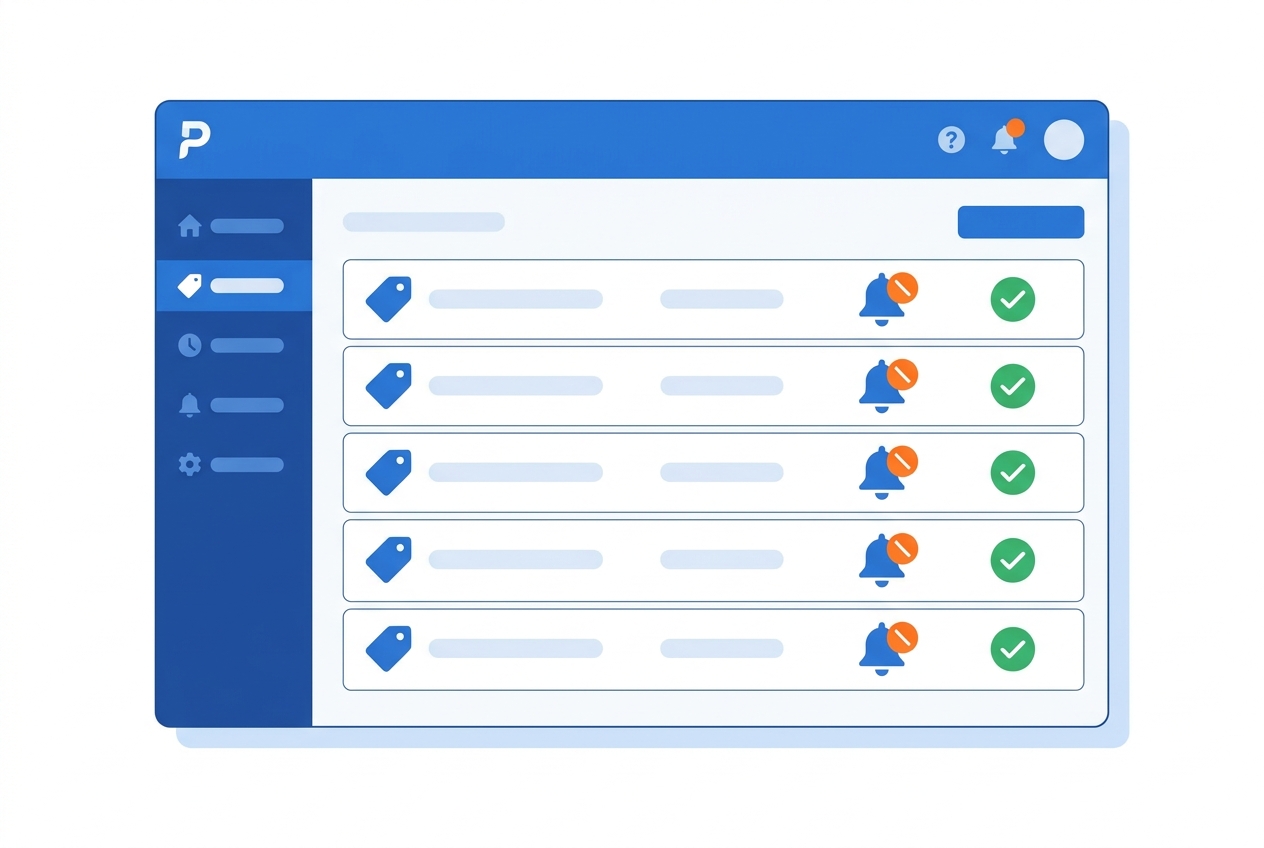
Manual MAP checks fall apart the moment you have more than a handful of products and sellers. The right MAP monitoring software does the watching for you — but not all are equal. What matters:
How to enforce MAP compliance
Monitoring finds the violations; enforcement is what changes behaviour. A workable escalation:
- Notify. Contact the retailer with the specific listing, price, and date — most violations are corrected on the first, evidence-backed request.
- Escalate. For repeat offenders, apply the consequences your policy sets out, from formal warnings to restricted terms.
- Enforce. Ultimately, a unilateral MAP policy lets a manufacturer stop supplying a persistent violator — the sanction that gives the whole policy teeth.
All of it depends on catching violations quickly and reliably, which is where price monitoring software earns its place — turning MAP enforcement from a manual scramble into a system that watches every channel for you and feeds the price intelligence you need to act.
Frequently asked questions
What is MAP monitoring?
MAP monitoring is the continuous tracking of retailers’ advertised prices to catch any that fall below your Minimum Advertised Price, so a MAP policy can actually be enforced.
Why is MAP monitoring important?
Because a MAP policy is unenforceable without it. Monitoring prevents price erosion, protects brand value, catches marketplace violations, and keeps compliant retailers from being undercut.
How does MAP monitoring software work?
It continuously scans your products across retailer sites and marketplaces, compares each advertised price to your MAP, flags any violations with the seller and price, and alerts you to act.
What should I look for in MAP monitoring software?
Broad channel coverage (including marketplaces), frequent near-real-time scans, automatic violation alerts, seller identification, and history/reporting for enforcement.
How do you enforce MAP compliance?
Notify violators with evidence, escalate for repeat offenders per your policy, and, as a last resort under a unilateral policy, stop supplying persistent violators.
MAP monitoring only works at the speed of your data. When you’re ready to watch every retailer and marketplace for violations automatically, Pricefy’s price monitoring keeps that picture in front of you in real time.