Andrea Cramer
Price scraping is the automated collection of product prices from ecommerce websites — the fast, hands-off alternative to opening a hundred competitor pages and copying prices into a spreadsheet. For any store competing on price, it’s the raw material behind every good pricing decision: you can’t react to a market you can’t see. After fifteen years pricing products in ecommerce, I can tell you the question was never whether to track competitor prices, but whether to build the machine to do it or buy one.
This guide covers what price scraping is, why it matters, how it works, the build-versus-buy decision, what to look for in price scraping software, and the legal side.
What you’ll find in this guide
- What is price scraping?
- Why scrape competitor prices?
- How price scraping works
- Price scraping: build vs. buy
- What to look for in price scraping software
- Is price scraping legal?
- Frequently asked questions
What is price scraping?
Price scraping is the process of automatically extracting prices — and often stock, product details, and promotions — from ecommerce websites and marketplaces. A program visits competitor product pages, reads the price from each, and delivers it as structured data you can actually use. It’s also called competitor price scraping or price monitoring, and it turns what would be an impossible manual chore across a real catalogue into a continuous, reliable feed of market data.
Why scrape competitor prices?
The value of price scraping is simple: it replaces guesswork with a live view of the market. With current competitor prices in hand, you can:
- Price competitively on purpose. Match, undercut, or hold a premium deliberately, instead of finding out days later that a rival moved.
- Feed dynamic pricing. Automated repricing is only as good as the data behind it; scraped prices are that data.
- Spot opportunities. Competitor stockouts, price drops, and new products all surface early.
- Enforce and analyse. From MAP compliance to margin analysis, most pricing work starts with knowing what everyone else charges.
How price scraping works
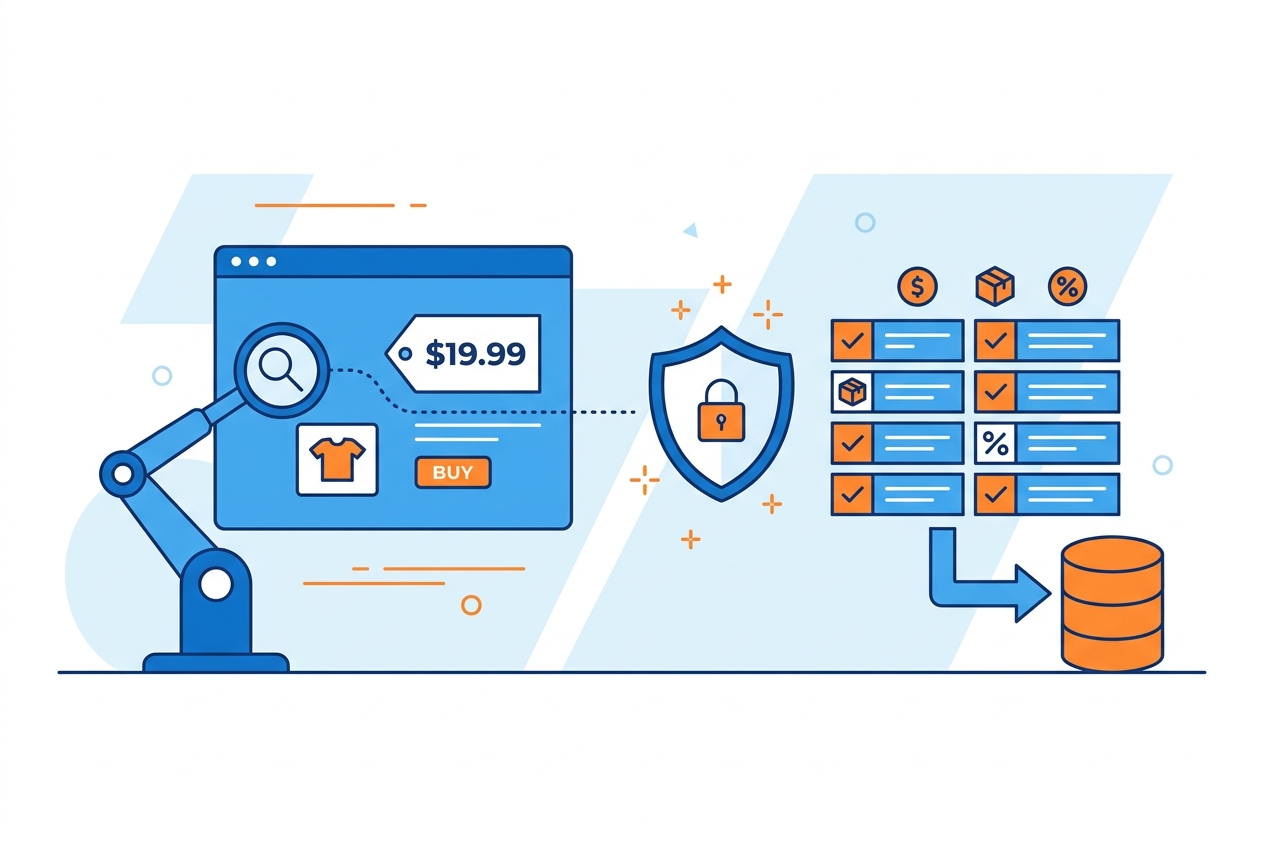
Under the hood, price scraping follows a consistent loop: a crawler requests a competitor’s product page, locates the price within the page’s structure, extracts it, and stores it as clean data — repeating across thousands of products on a schedule. Simple in principle, but three things make it genuinely hard at scale:
- Anti-bot defences. Big retailers actively block automated traffic, so scrapers need to handle rate limits, IP rotation, and CAPTCHAs.
- Messy, changing pages. Every site structures its pages differently, and they redesign without warning — which breaks a scraper that was reading a fixed spot.
- Product matching. A price is useless unless it’s matched to the right product; aligning your SKU to a competitor’s listing is often the hardest part of all.
Price scraping: build vs. buy
This is the real decision. You can build your own scraper or use dedicated software, and the trade-off is stark.
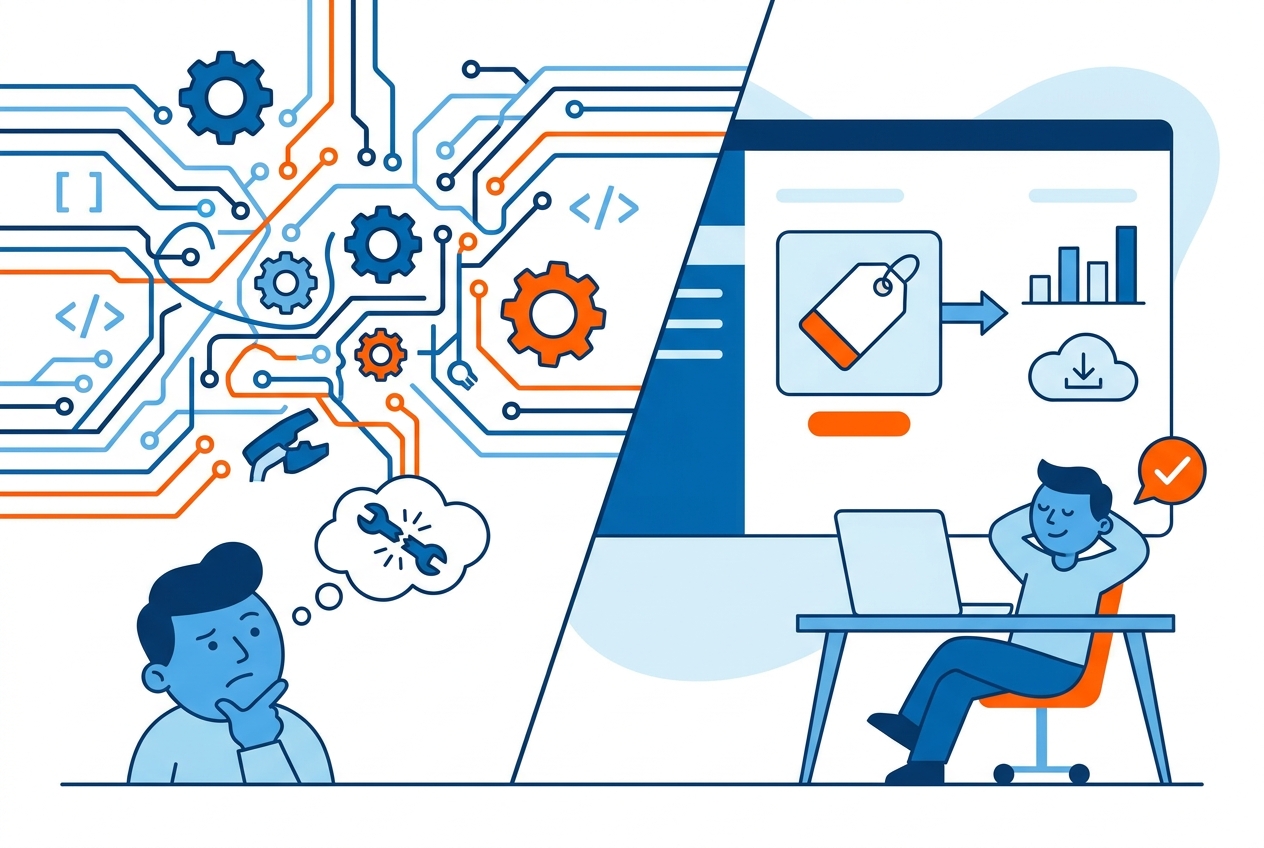
DIY scraping looks cheap until you count the maintenance. Sites change, anti-bot measures tighten, and product matching quietly eats your week — which is why most businesses that don’t have engineers to spare choose a tool that keeps working while they focus on pricing, not plumbing.
What to look for in price scraping software
If you go the software route — and most should — a few capabilities separate a tool that helps from one that frustrates:
- Broad coverage of the retailer sites and marketplaces you actually compete on.
- Accurate product matching, so competitor prices line up with the right SKU — the difference between usable data and noise.
- Frequent, reliable refreshes that keep the data current instead of stale.
- Alerts and analysis that turn raw prices into decisions.
This is exactly what competitor price monitoring software is built to do — scrape competitor prices across sites, match them to your catalogue, and surface where you stand — and it feeds directly into dynamic pricing so you can act on the data automatically.
Is price scraping legal?
In general, scraping publicly available prices is legal in many jurisdictions — the well-known HiQ Labs v. LinkedIn case affirmed that publicly accessible data is fair game, while data behind a login or protected barrier is not. That said, the picture varies by country and by how you do it. We cover the nuances in depth in our guide to whether it’s legal to scrape ecommerce websites — worth reading before you build anything.
Frequently asked questions
What is price scraping?
Price scraping is the automated extraction of product prices (and often stock and details) from ecommerce websites, delivering a continuous feed of competitor price data you can use for pricing decisions.
Why scrape competitor prices?
To see the market in real time — so you can price competitively on purpose, feed dynamic pricing, spot competitor stockouts and drops, and support MAP and margin analysis.
Is price scraping legal?
Scraping publicly available prices is generally legal in many jurisdictions, while scraping data behind a login or protected barrier is not. The specifics vary by country — see our dedicated guide on the legality of scraping.
What’s the best way to scrape competitor prices?
For most businesses, dedicated price scraping/monitoring software beats building your own scraper: it handles anti-bot measures, site changes, and product matching automatically, so you get clean data without the maintenance.
Whether you build or buy, the point of price scraping is the same — a live view of the market. When you’d rather have that data without maintaining a single scraper, price monitoring software collects it across every competitor for you.