Paul Morello
Understanding the difference between wholesale and retail price is fundamental to running a profitable business — and it starts with knowing what each one is. In short: the wholesale price is what a retailer pays to buy products in bulk from a manufacturer or distributor, and the retail price is what the end customer pays in the shop. The gap between them is the markup, and it’s where a retailer’s margin lives. After fifteen years pricing products on both sides of that gap, I can tell you most pricing mistakes trace back to misjudging it.
This guide defines wholesale price, compares it with retail price, shows how to calculate both, and explains how wholesale pricing actually works.
What you’ll find in this guide
- What is wholesale price?
- What is retail price?
- Wholesale price vs. retail price
- How to calculate wholesale and retail price
- How wholesale pricing works
- Frequently asked questions
What is wholesale price?
The wholesale price is the amount a manufacturer or distributor charges retailers for products bought in bulk. It’s set lower than the retail price so the retailer can resell at a profit, and it usually comes with conditions — a minimum order quantity, and often a resale licence or trade account. In other words, the wholesale price is the “business-to-business” price: the cost of goods a retailer starts from before adding their markup. Getting it right matters to both sides, because it sets the floor under every retail price downstream.
What is retail price?
The retail price is the final price the end consumer pays. It’s the wholesale price plus the retailer’s markup — the amount that has to cover their costs (storage, staff, marketing, returns) and leave a profit. Where the wholesale price is a bulk, business-to-business figure, the retail price is a single-unit, business-to-consumer one. The same product carries both at different points in its journey to the customer.
Wholesale price vs. retail price
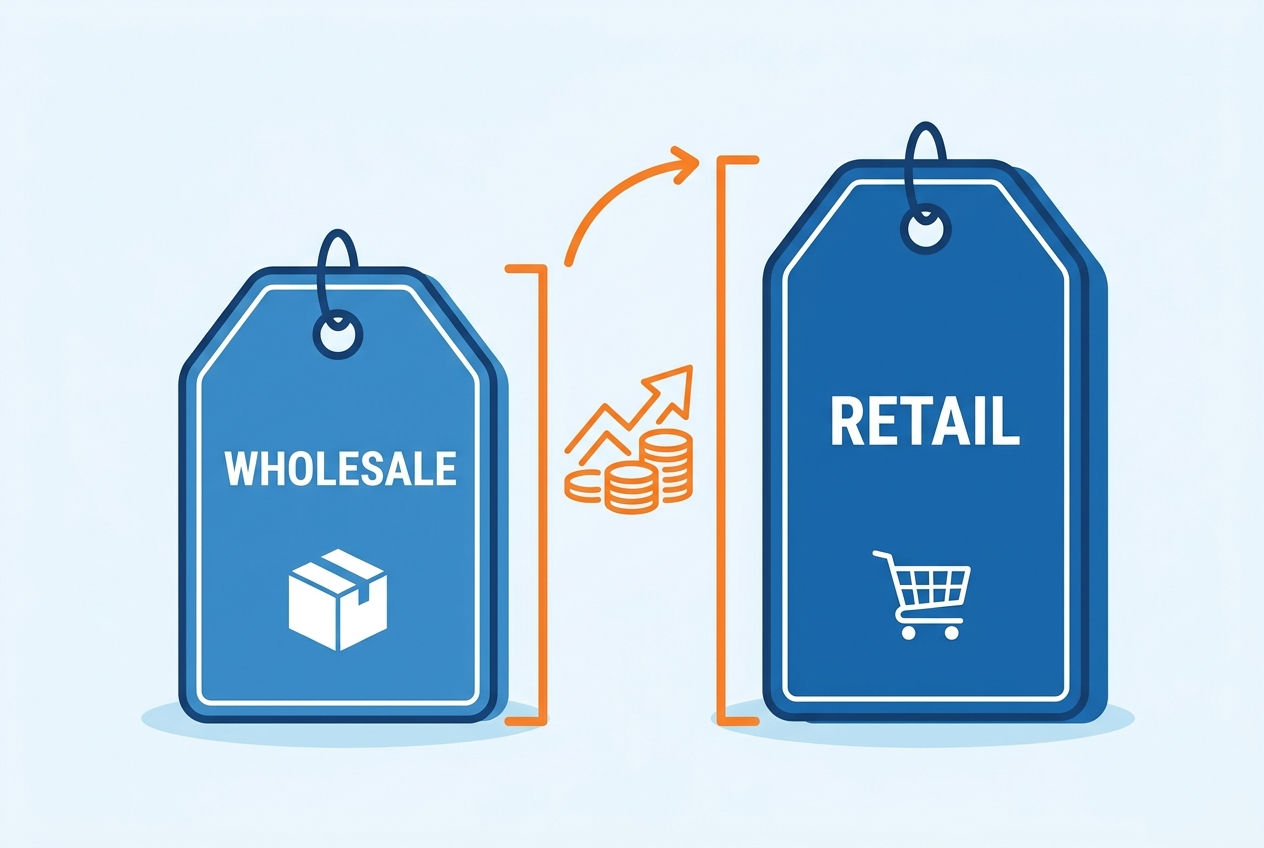
The two are easy to confuse because they describe the same product — just at different stages. Here’s how they compare.
How to calculate wholesale and retail price
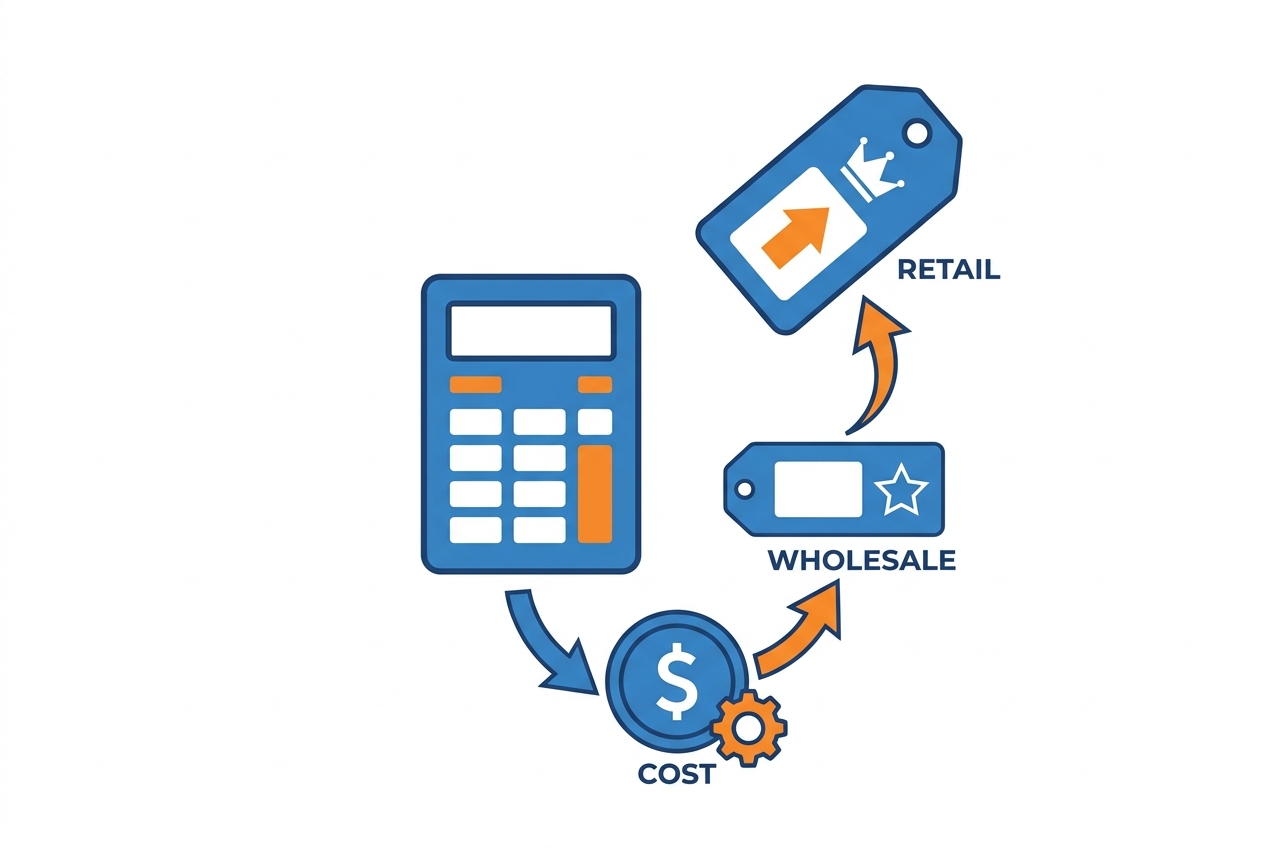
Both figures work back from cost. A simple, reliable approach:
Wholesale price = cost of goods + wholesale margin. If a product costs $20 to make and you want a 50% wholesale margin, the wholesale price is $30.
Retail price = wholesale price × retail markup. If the retailer applies a 2× (keystone) markup, the retail price is $60. The difference between the $30 wholesale and $60 retail — the $30 markup — is the retailer’s gross margin before their own costs.
These are starting points, not final answers. The right wholesale margin depends on your costs and what the market will bear, and the right retail markup depends on competition and perceived value — which is why you validate both against what comparable products actually sell for rather than trusting the formula alone.
How wholesale pricing works
Wholesale pricing runs on volume. A manufacturer accepts a lower price per unit because the retailer commits to buying in bulk, which reduces selling and handling costs and guarantees turnover. That’s why wholesale usually comes with minimum order quantities and tiered pricing — the more you buy, the lower the unit price.
For the retailer, the wholesale price is the foundation of the whole pricing strategy: it sets the floor you must price above to make money. The tighter your handle on wholesale costs and competitor retail prices, the more room you have to price deliberately. Keeping an eye on where competitors set their retail prices — something sellers monitor competitor prices for continuously — tells you how much markup the market will actually accept, and dynamic pricing helps you hold the right retail margin as those competitor prices move. Wholesale pricing is one piece of a broader plan; see our guide to ecommerce pricing strategies for how it fits together.
Frequently asked questions
What is a wholesale price?
A wholesale price is the amount a manufacturer or distributor charges retailers for products bought in bulk. It’s lower than the retail price so retailers can resell at a profit, and it often requires a minimum order and a resale licence.
What is the difference between wholesale and retail price?
The wholesale price is the bulk, business-to-business price a retailer pays; the retail price is the higher, single-unit price the end consumer pays. The difference between them is the retailer’s markup.
How do you calculate wholesale price?
Add your desired wholesale margin to the cost of goods. For example, a $20 cost with a 50% wholesale margin gives a $30 wholesale price. The retailer then applies their own markup to reach the retail price.
Why is wholesale price lower than retail price?
Because wholesale buyers purchase in bulk, which lowers the seller’s per-unit selling and handling costs and guarantees volume. The retailer then adds a markup to cover their own costs and profit.
Whether you’re setting wholesale prices or the retail prices built on top of them, the margin only holds if you know what the market is doing. When you’re ready to see competitors’ retail prices in real time, price monitoring software keeps that picture in front of you.