Paul Morello
Pricing has quietly become one of the fastest-moving parts of ecommerce. What was once a number you set and forgot is now a live, data-driven decision reshaped by AI, competition, and shifting customer expectations. Staying on top of where pricing is heading isn’t optional anymore — it’s how you avoid being outmanoeuvred. After fifteen years pricing products across retail and ecommerce, here are the pricing trends genuinely shaping the industry in 2026, and what to do about each.
What you’ll find in this guide
- The pricing trends shaping 2026 at a glance
- AI and dynamic pricing go mainstream
- Real-time competitor monitoring becomes table stakes
- Price transparency and fairness under scrutiny
- Personalization — with limits
- How to stay ahead
- Frequently asked questions
The pricing trends shaping 2026 at a glance

AI and dynamic pricing go mainstream
The biggest shift is that dynamic pricing — continuously adjusting prices to demand, supply, and competition — is no longer the preserve of Amazon and the airlines. AI and machine learning have made automated repricing accessible to businesses of every size, and it’s fast becoming the baseline rather than the advantage. In 2026 the question isn’t whether to reprice dynamically, but how well: the edge now lies in the quality of your data and the sense of your rules, not in simply having the capability.
Real-time competitor monitoring becomes table stakes
You can’t price against a market you can’t see. As pricing speeds up, knowing what competitors charge right now has shifted from a nice-to-have to a baseline requirement — a price checked yesterday is already stale. Automated competitor price monitoring is becoming standard kit precisely because manual tracking can’t keep pace with a market that reprices by the hour.
Price transparency and fairness under scrutiny
As dynamic and personalized pricing spread, so does scrutiny of them. High-profile backlashes over surge pricing on event tickets have put “fairness” on the agenda for consumers and regulators alike. The trend for 2026 is that how you change prices matters as much as the change itself — swings that look like gouging cost trust, and increasingly draw regulatory attention. The winning approach is dynamic pricing with clear, defensible boundaries, not opaque, unbounded moves.
Personalization — with limits
Tailoring offers and prices to segments and behaviour continues to grow, powered by better data. But it sits right next to the transparency trend above: charging different customers different prices for the identical product, if discovered, breeds resentment fast. The sustainable version is personalized offers and bundles — value the customer opts into — rather than covert individual price discrimination.
How to stay ahead
The trends all point the same way: pricing is becoming faster, more automated, and more data-driven. To keep up:
- Get your data right. Everything downstream — dynamic pricing, analytics, personalization — runs on accurate, current market data, the domain of price intelligence.
- Automate the repricing. Rules-based dynamic pricing lets you move at market speed without manual work.
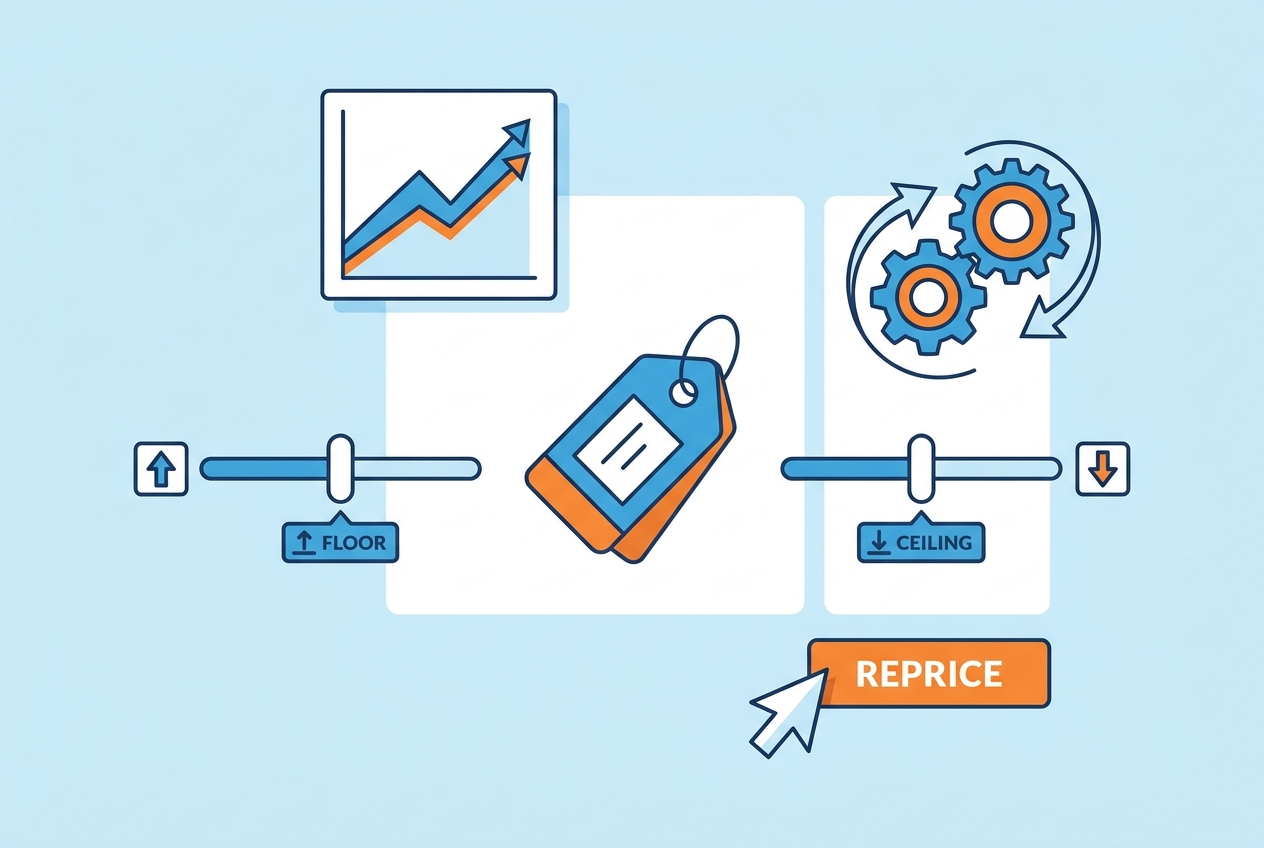
- Price deliberately, not opaquely. Set floors, ceilings, and boundaries so speed never costs you trust.
- Ground it in strategy. Trends are tactics; anchor them in a clear plan — our guide to ecommerce pricing strategies and to value-based pricing is a good place to start.
Frequently asked questions
What are the biggest ecommerce pricing trends in 2026?
AI-driven dynamic pricing becoming mainstream, real-time competitor monitoring as a baseline, growing scrutiny of price transparency and fairness, cautious growth in personalization, and the shift to data-driven pricing over gut feel.
Is dynamic pricing still a trend in 2026?
It’s less a trend than the new normal — AI has made automated repricing accessible to businesses of all sizes, so the advantage now lies in the quality of your data and rules rather than in having the capability at all.
How can a small business keep up with pricing trends?
Start with accurate market data and automated competitor monitoring, adopt rules-based dynamic pricing, and set clear price boundaries — modern pricing software makes all three accessible without a data-science team.
Every one of these trends comes back to the same foundation: a live, accurate view of the market. When you’re ready to price on real-time data rather than yesterday’s guess, price monitoring software keeps that picture in front of you.