Paul Morello
A comparison shopping engine (CSE) is a website that gathers product listings from many retailers into one place, so a shopper can compare the price, shipping and availability of the same product across sellers on a single page — think Google Shopping, idealo or PriceRunner. For shoppers, they’re a shortcut to the best deal. For retailers, they’re one of the highest-intent channels there is: the buyer already knows what they want and is only deciding where to buy it. After fifteen years placing products across retail and ecommerce, I can tell you CSEs are where a competitive price turns directly into a sale — and where an uncompetitive one is punished in seconds.
This guide explains what comparison shopping engines are, why they matter, how to get your products onto them, the leading CSEs in every major market, and how to actually win once you’re there.
What you’ll find in this guide
- What is a comparison shopping engine?
- Why comparison shopping engines matter for retailers
- How to get your products onto a CSE
- The best comparison shopping engines by country
- How to win on comparison shopping engines
- Frequently asked questions
What is a comparison shopping engine?
A comparison shopping engine is a price-comparison platform that aggregates the same product from multiple merchants and shows the offers side by side — usually sorted by price. Shoppers search or browse, land on a product, and see a ranked list of who sells it and for how much; they click through to the retailer to buy. The best-known example is Google Shopping, but every market has its own leaders, from idealo in Germany to Skroutz in Greece.
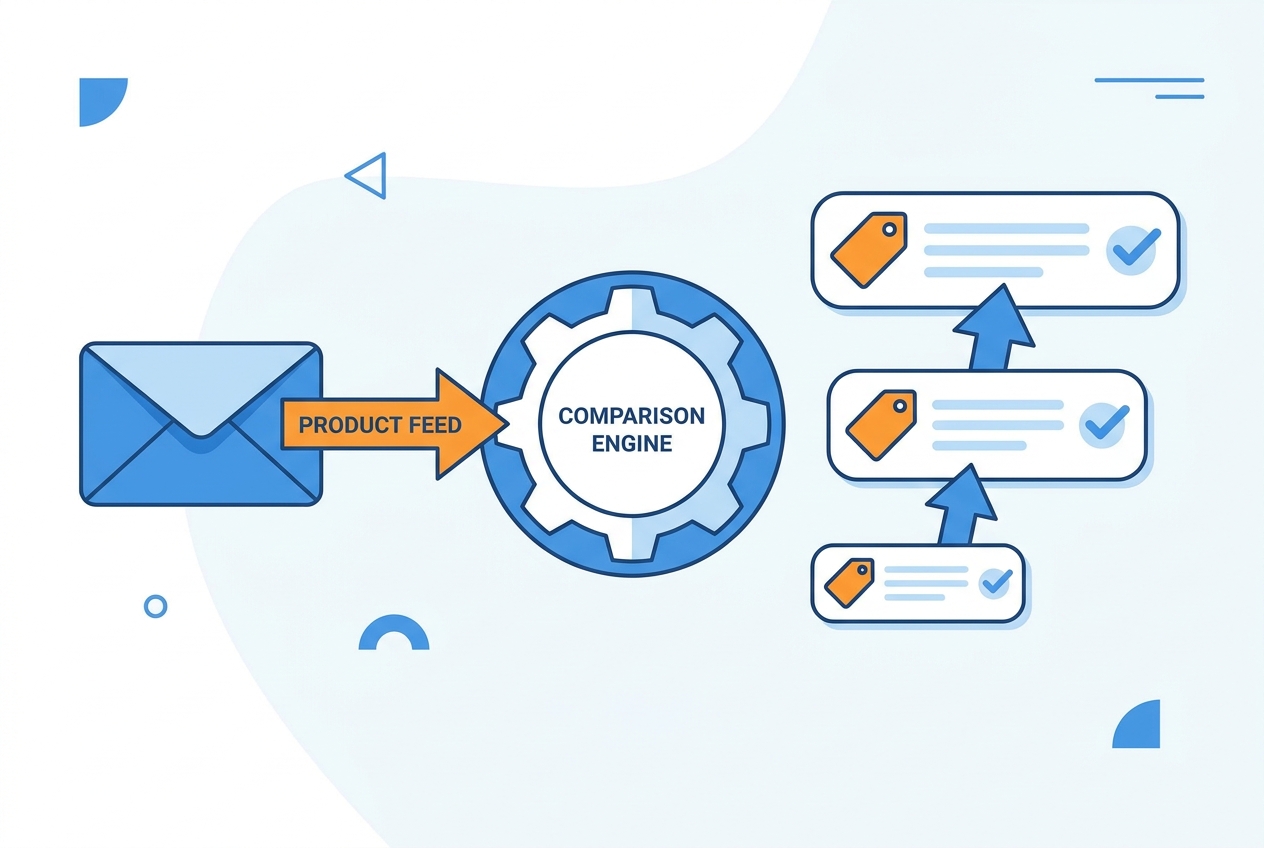
The mechanics are the same everywhere: retailers submit a product feed — a structured file of their catalog with titles, prices, availability, images and identifiers — and the engine indexes it, matches products across sellers, and displays the offers. Because listings are matched to a single product page and ranked largely on price, a CSE is one of the few channels where your competitiveness is visible to the shopper at the exact moment of decision.
Why comparison shopping engines matter for retailers
CSEs aren’t just another listing surface — they attract shoppers at the bottom of the funnel, ready to buy. The reasons they earn a place in almost every retailer’s channel mix:
The flip side is the catch: the same transparency that rewards a sharp price exposes a soft one. On a CSE you are ranked against every rival selling the identical product, so the channel only pays off if your pricing and your feed are both in order.
How to get your products onto a CSE
Every comparison shopping engine runs on a product feed: you map your catalog to the engine’s required fields — title, price, availability, GTIN, category and more — and deliver it on a schedule so listings stay current. The friction is that each engine has its own specification and its own quirks, and prices and stock change constantly, so a feed that was accurate this morning can be wrong by the afternoon.
That’s the job Pricefy’s feed management solves: it maps your catalog once, validates every product against each engine’s spec, and refreshes the feed on schedule — with your repriced, in-stock prices built in. You can browse the full feed channel library to see the exact requirements for each engine, from Google Shopping to the regional CSEs below.
The best comparison shopping engines by country
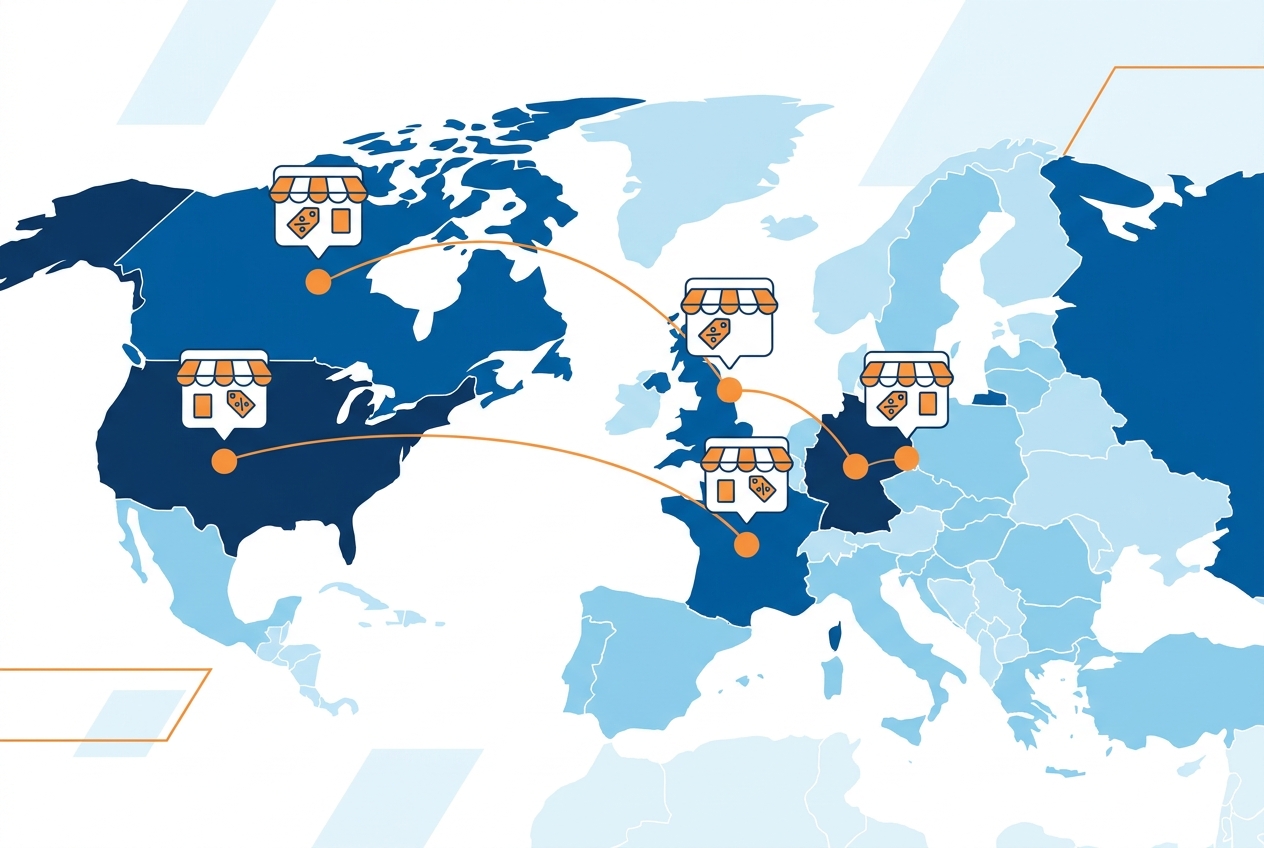
Google Shopping is near-universal, but in most of Europe a local engine matters just as much — and sometimes more. Here are the leading comparison shopping engines by market, each linked to its feed requirements:
This is a shortlist of market leaders — Pricefy supports well over a hundred comparison engines in total. Browse the complete feed channel library for the country you sell in.
How to win on comparison shopping engines
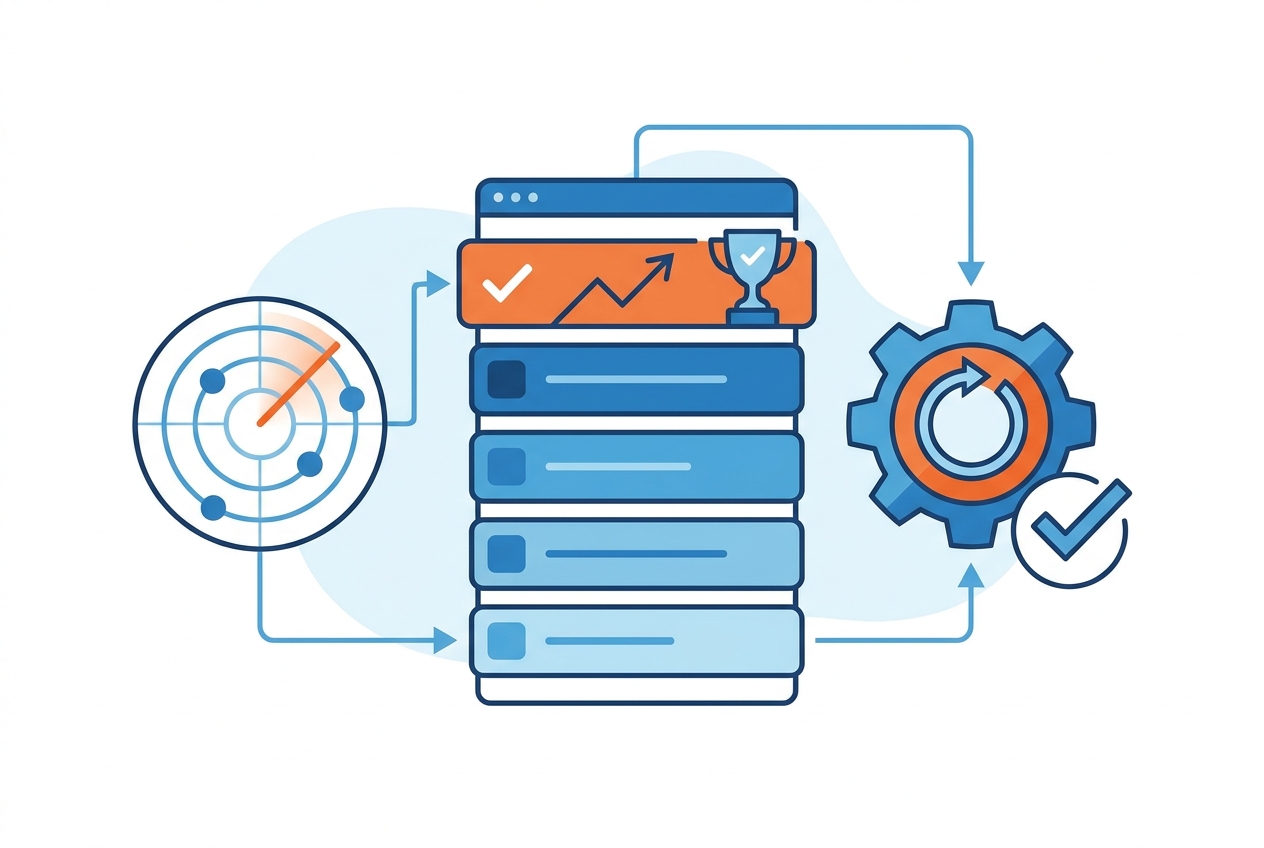
Getting listed is the easy part. Winning is a pricing game, because CSEs sort offers by price and shoppers overwhelmingly click the top few. Three disciplines decide whether the channel makes you money:
- Know where you stand. You can’t compete on a market you can’t see. Automated competitor price monitoring shows exactly where your offer sits against every rival on each engine, in real time.
- Reprice to compete, within your margins. Once you can see the market, dynamic pricing adjusts your prices automatically to stay competitive — with floors and ceilings so you never chase a race to the bottom.
- Keep the feed clean and current. A great price on a stale or rejected feed wins nothing. Validated, scheduled feeds keep your live prices and stock in front of shoppers.
Done together, these turn a CSE from a cost centre into a reliable, profitable channel. The through-line is the same one that runs through all of comparison shopping: real-time price monitoring is what lets you price to win instead of pricing on a hunch.
Frequently asked questions
What is a comparison shopping engine?
A comparison shopping engine (CSE) is a website that aggregates the same product from many retailers and displays their offers side by side, usually ranked by price, so shoppers can find the best deal and click through to buy. Google Shopping, idealo and PriceRunner are well-known examples.
Are comparison shopping engines worth it for retailers?
For most retailers, yes. CSEs deliver high-intent shoppers who are ready to buy and typically charge per click or per sale, so they convert well and are cost-effective — provided your prices are competitive and your feed is accurate.
How do I list my products on a comparison shopping engine?
You submit a product feed — a structured file of your catalog mapped to the engine’s required fields — and refresh it on a schedule. Feed management software like Pricefy maps your catalog to each engine’s spec, validates it, and keeps prices and stock current automatically.
Which is the best comparison shopping engine?
It depends on your market. Google Shopping has the widest reach, but regional engines often dominate locally — idealo in Germany, Trovaprezzi in Italy, Skroutz in Greece, Ceneo in Poland. The best strategy is usually Google Shopping plus the leading local engine for each country you sell in.
How much do comparison shopping engines cost?
Most CSEs use a cost-per-click (CPC) or commission model, so you pay only when a shopper clicks through or buys, rather than for impressions. Costs vary by engine and category, which is why competitive pricing and a well-optimised feed are what make the channel profitable.
Comparison shopping engines reward the retailer with the sharpest price and the cleanest feed — and punish everyone else. When you’re ready to see where you stand and price to win across every engine, price monitoring software and a validated feed are what turn comparison shopping into a channel that pays.