 Paul Morello
Product data enrichment is the process of upgrading your raw catalog data — the bare titles, prices and photos most systems start with — into complete, accurate, channel-ready product information: normalized attributes, correct categories, identifiers, variant data and descriptions that actually describe. (Not to be confused with CRM or contact data enrichment, which is about companies and people — this is about products.) After fifteen years working with ecommerce catalogs, I can tell you enrichment is the least glamorous, highest-yield work in product data: the same SKU with enriched data ranks better on your site, gets approved instead of rejected in your feeds, and matches correctly on every marketplace. Here’s what product data enrichment involves, why it pays, and how to do it across a real catalog.
What you’ll find in this guide
- What is product data enrichment?
- Why enriched product data wins
- What to enrich: the attribute checklist
- How to enrich product data, step by step
- Enrichment and your product feeds
- Frequently asked questions
What is product data enrichment?
Every catalog starts poor. Products arrive from suppliers or get created in a rush with the minimum: a name, a price, a photo, maybe a manufacturer paragraph. Product data enrichment is everything you add and fix on top of that baseline so the product can perform: complete attributes (material, colour, size, compatibility), a correct category on every channel’s taxonomy, valid identifiers (GTIN/EAN, brand, MPN), normalized values (“Navy” not “drk blue #2”), better images, and copy written for the buyer.
The test is simple: could a shopper — or a channel’s matching algorithm — answer every reasonable question about this product from the data alone? If not, there’s enrichment to do.
Why enriched product data wins
The through-line: every channel is a machine that reads your data, and machines reward completeness. A half-filled product is invisible in ways you never see — the filter it didn’t appear in, the feed slot it lost, the AI answer that recommended the competitor whose data was complete.
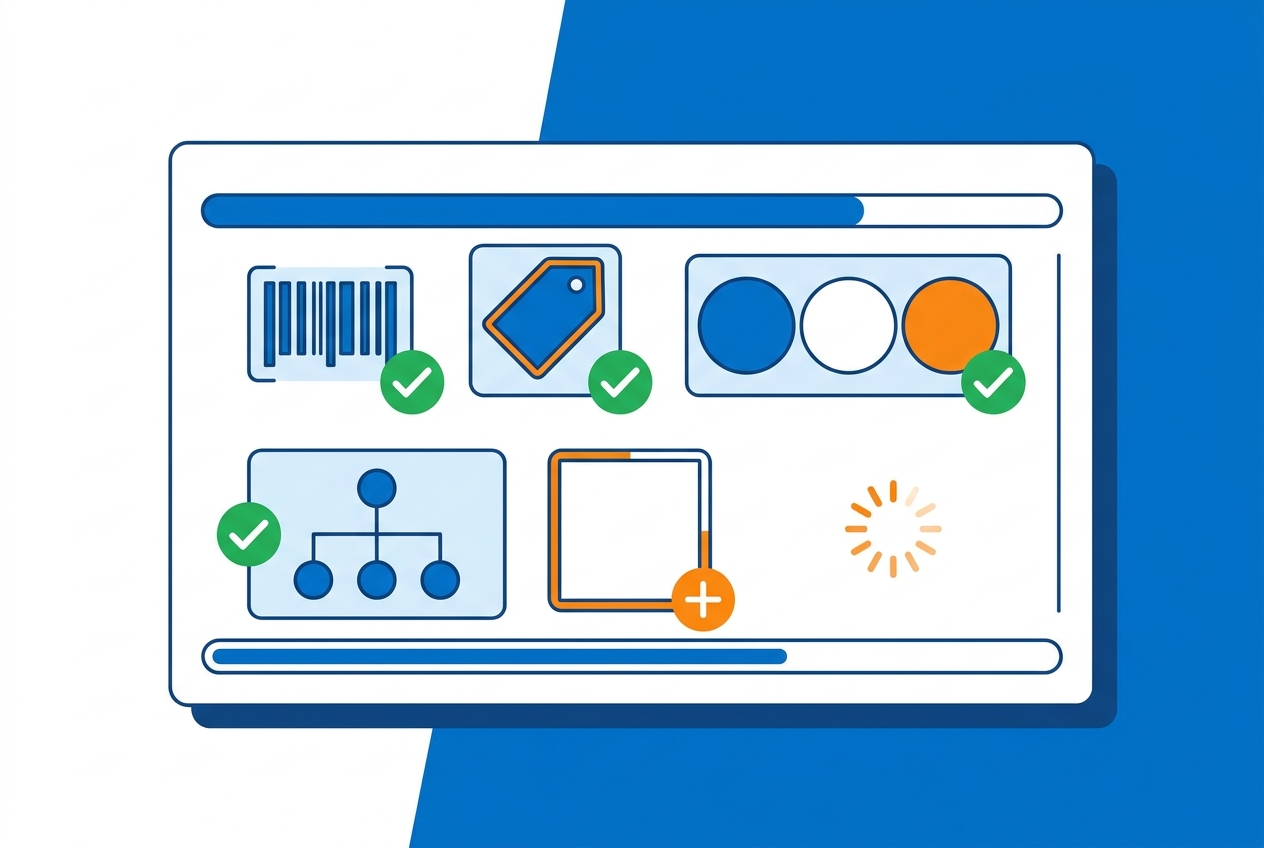
What to enrich: the attribute checklist
Work through these layers, in this order of leverage:
- Identifiers first. GTIN/EAN, brand, MPN — correct and complete. They drive matching everywhere, and missing identifiers block listings outright on many channels.
- Categories, per channel. Your internal category plus the mapped taxonomy of each destination (Google’s product taxonomy, marketplace categories). Mis-categorised products get buried.
- Core attributes, normalized. Size, colour, material, gender, age group — with consistent values, not five spellings of the same colour. Normalization is what makes filters and variants work.
- Variant structure. Parent/child relationships done properly, so reviews pool and channels understand the family.
- Titles and descriptions. Buyer-language titles front-loaded with what people search, and product descriptions that are unique and specific — enrichment’s most visible layer.
- Rich extras where they earn it. Additional images, size charts, compatibility lists, energy labels — category by category, where they answer real buyer questions.
How to enrich product data, step by step
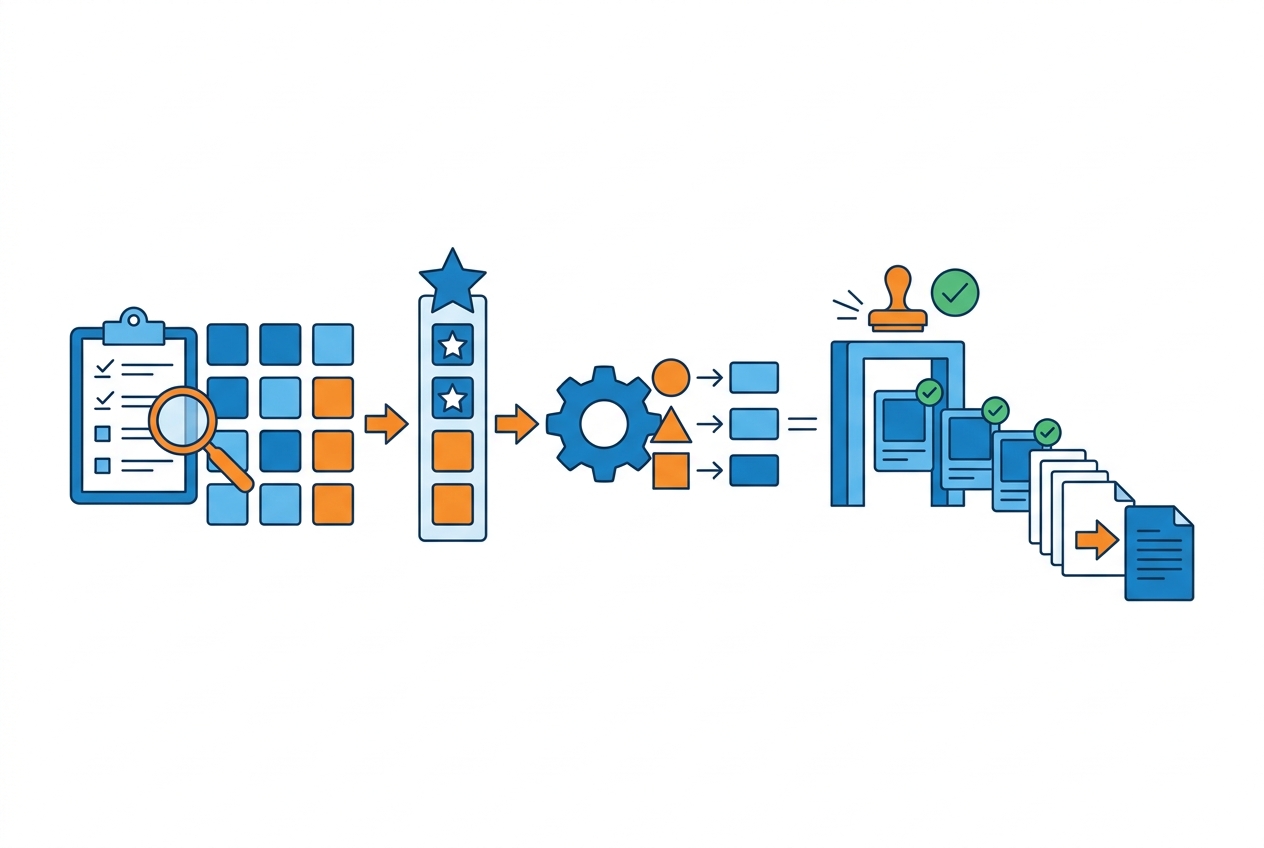
- Audit the gaps. Export your catalog and measure completeness per attribute: what share of products have a GTIN, a mapped category, a normalized colour? The gaps are your work list.
- Prioritize by revenue and requirements. Enrich best-sellers and channel-required attributes first — the fields that block listings or lose placement — then work down.
- Pull from the best source available. Manufacturer spec sheets for facts, your own data for what sells, AI assistance for drafting at scale — always with human editing, because wrong “enrichment” is worse than none: it corrupts feeds and listings everywhere at once.
- Normalize with rules, not by hand. Value mappings (“drk blue” → “Navy”), unit conversions, casing fixes — encode them once as rules so every future import stays clean.
- Validate where the data lands. Enrichment isn’t done when the spreadsheet looks good; it’s done when every channel accepts the product. Feed validation is the reality check.
- Measure and repeat. Track approval rates, impressions and conversion on enriched vs untouched products — the delta is your business case for the next batch.
Enrichment and your product feeds
Feeds are where enrichment pays — or where its absence gets billed. Every channel spec has required attributes that block listings and recommended ones that decide placement; enrichment is how you go from “barely approved” to “fully matched.” In practice, most bulk enrichment work happens in the feed layer: feed management rules that map fields, fix values, and fill channel-specific attributes for every destination from one master catalog — the operational side of the strategy in our guide to product feed optimization.
One enrichment layer deserves special mention: identifiers. Complete GTINs don’t just satisfy the spec — they’re how your products get matched to competitor offers across the market, which is what makes product matching and price comparison possible at all. Enrich the identifiers and you haven’t just improved a feed; you’ve made your catalog monitorable.
Frequently asked questions
What is product data enrichment?
The process of completing and improving raw catalog data — identifiers, categories, normalized attributes, variants, images and copy — so products perform on your site, in shopping feeds, on marketplaces and in AI shopping surfaces.
How is enrichment different from data cleansing?
Cleansing fixes what’s wrong (typos, duplicates, bad values); enrichment adds what’s missing (attributes, categories, identifiers, better copy). In practice you do both in one pass: normalize the existing data, then fill the gaps.
Is this the same as CRM data enrichment?
No — CRM/contact enrichment adds firmographic data about companies and people for sales teams. Product data enrichment is about your catalog. Same word, different world.
Can AI do product data enrichment?
AI is genuinely useful for drafting attributes and copy at scale — but only with your product facts in and human review out. Inaccurate enrichment propagates to every channel simultaneously, so treat AI as a fast assistant, not an unsupervised author.
Enriched data compounds quietly: better matching, better placement, fewer rejections, fewer returns — on every channel at once. Audit your top hundred products this week, fix identifiers and categories first, and let your feed rules carry the work everywhere it counts.


