 Paul Morello
Writing SEO product descriptions means satisfying two readers at once: the shopper deciding whether to buy, and the search engine deciding whether to show you. Most stores fail both — they paste the manufacturer’s text, which converts nobody and ranks nowhere, because a hundred other stores pasted the same paragraph. After fifteen years working with product catalogs, I can tell you description quality is one of the few levers that lifts organic traffic, conversion rate and feed performance at the same time. Here’s how to write product descriptions that sell — with a repeatable formula, a real example, and how to do it across a full catalog without losing your mind.
What you’ll find in this guide
- What a product description has to do
- SEO for product descriptions: what actually matters
- How to write a product description: the formula
- A product description example, before and after
- Product descriptions at catalog scale
- Frequently asked questions
What a product description has to do
A product description has exactly three jobs: tell the shopper this is the right product for them, remove the doubts that block the purchase, and give search engines unique, relevant text to rank. Everything else — brand poetry, adjective stacking, “premium quality” — is filler wearing a job badge.
The failure mode is almost always the same: descriptions written about the product instead of the buyer. “600D polyester construction with reinforced stitching” is a spec. “Survives being dragged through an airport twice a month” is a reason to buy that happens to be backed by a spec. You need both, in that order.
SEO for product descriptions: what actually matters
Product-page SEO is simpler than blog SEO, but less forgiving. The rules that move the needle:
The duplicate-content point deserves emphasis because it’s the most common self-inflicted wound: when hundreds of stores publish the same manufacturer boilerplate, search engines have no reason to rank your copy of it. Unique descriptions are slower to produce — and they’re precisely why some stores get organic product traffic and most don’t. The same text also rides along in your product feed as the description attribute, where channels like Google Merchant Center use it for matching and relevance — one more reason it should be yours, accurate, and current.
How to write a product description: the formula
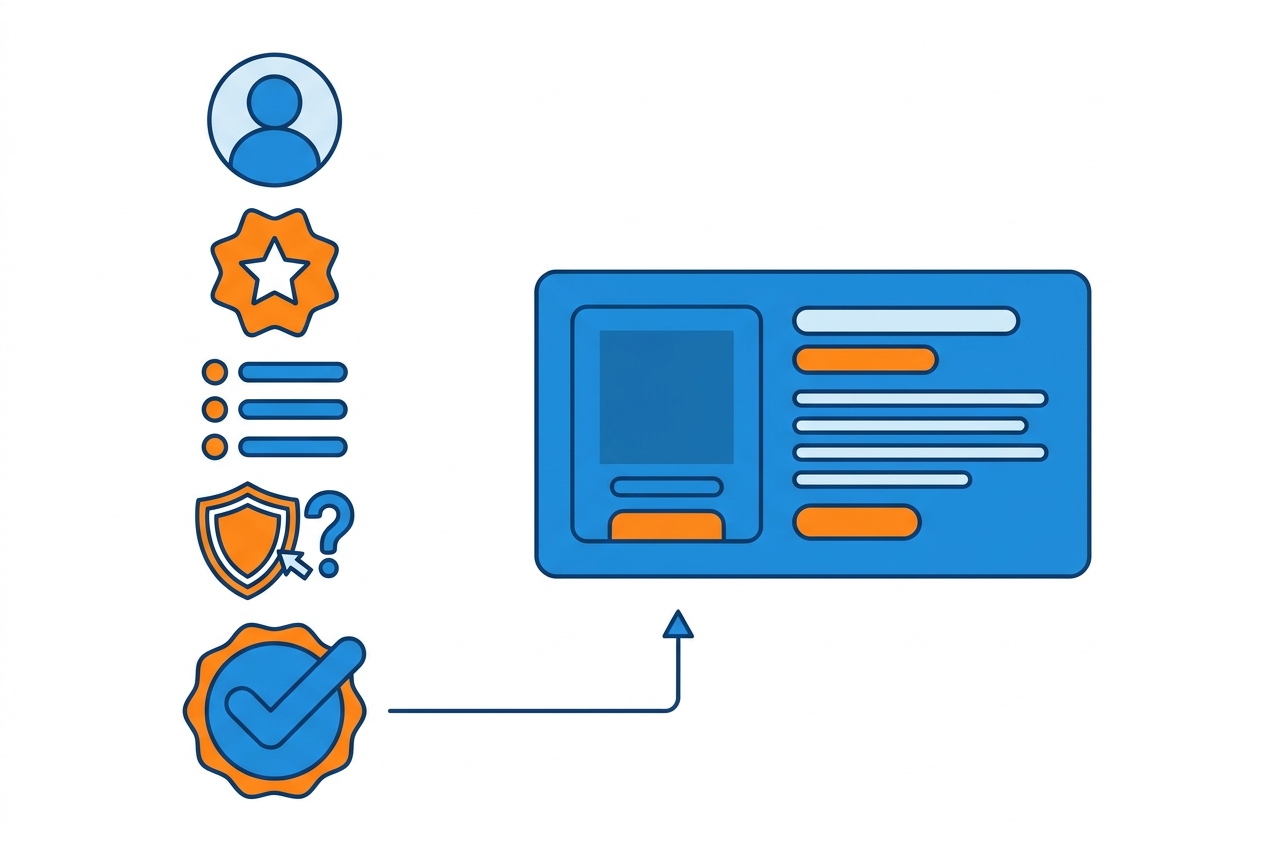
A repeatable five-step structure that works across categories:
- Name the buyer and the moment. One line that tells the right person “this is for you”: who it’s for, used where, solving what.
- Lead with the strongest benefit. The single best reason this product wins — stated as an outcome, not a feature.
- Back it with specifics. Bullet the facts that make the benefit credible: materials, dimensions, compatibility, battery life, care. Specifics convert; vagueness bounces.
- Kill the objection. Every product has one question that blocks the sale — sizing, durability, “will it work with mine?”. Answer it in the description, before they ask.
- Close with clarity. What’s in the box, guarantee, shipping promise. No drama, no “act now” — clarity is the close.
A product description example, before and after
Before (the manufacturer boilerplate a hundred stores use):
“Premium quality insulated bottle made from high-grade stainless steel. Features double-wall vacuum insulation technology and a leak-proof lid. Available in multiple colors. Perfect for everyday use.”
After (the same product, doing its three jobs):
“Built for commuters who want coffee still hot at noon: this 500 ml stainless-steel bottle keeps drinks hot for 12 hours and cold for 24, thanks to double-wall vacuum insulation. The screw lid is genuinely leak-proof — laptop-bag safe — and the powder-coated finish won’t sweat or slip. Fits standard car cup holders and most bike cages. Hand-wash the lid, dishwasher for the body, and it’s covered by a 2-year warranty.”
Same product, same facts available to everyone. The second one names the buyer, leads with the benefit, proves it with specifics, kills the leak-and-fit objections, and closes on the warranty — and it’s text nobody else has, which is what earns it the ranking.
Product descriptions at catalog scale
The formula works at ten products. At a thousand, you need process:
- Prioritize by revenue. Hand-write your top sellers and top landing pages first — that’s where description quality pays fastest. Work down the catalog from there.
- Template by category, personalize by product. A category shares the structure (what buyers of running shoes always need to know); each product fills it with its own specifics. Structure scales, boilerplate doesn’t.
- Use AI as a drafter, not an author. Generators produce a competent first pass at scale — but publish them raw and you’re back to boilerplate, just statistically flavoured. Feed them your specifics, then edit for accuracy and voice. Accuracy matters doubly in feeds, where wrong details become policy problems.
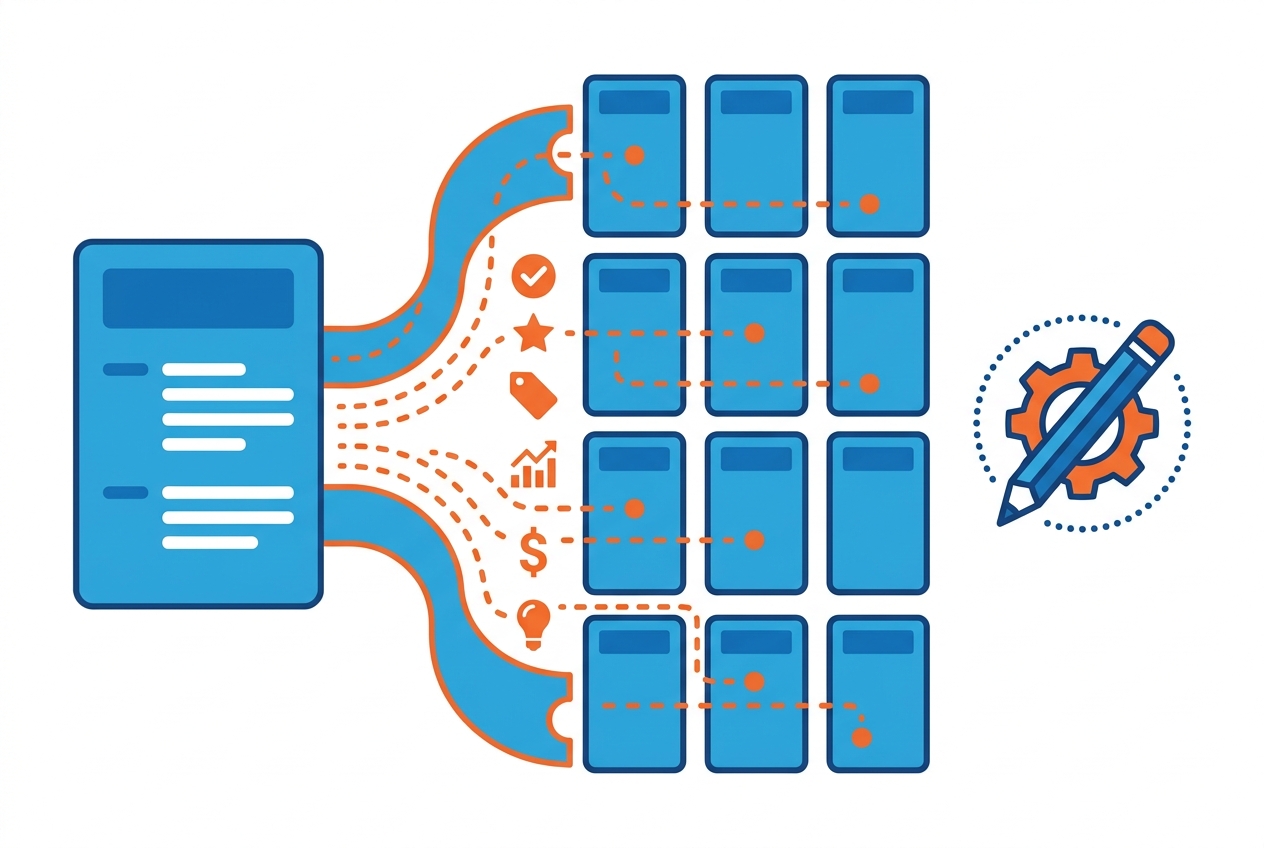
- Keep one source of truth. Descriptions live in your catalog and flow out to your site, marketplaces and shopping channels via feed management — edited once, correct everywhere, instead of drifting apart channel by channel.
Frequently asked questions
How long should a product description be?
As long as the purchase decision needs — typically 50–150 words for simple products, up to ~300 for considered ones. Length is a byproduct of answering the buyer’s real questions, never a target.
Are product descriptions important for SEO?
Yes — they’re often the only substantial unique text on a product page. Unique, specific descriptions give search engines a reason to rank your page over the hundred others selling the same item with the same manufacturer text.
Can I just use the manufacturer’s description?
You can, and you’ll rank like everyone else who did — which is to say, you won’t. Use the manufacturer’s facts, but write your own text. If the catalog is big, start with your best sellers.
Should I use AI to write product descriptions?
As a drafter, yes; as an unsupervised author, no. Give it your product’s real specifics, then edit for accuracy and voice. Unedited generic output recreates the duplicate-boilerplate problem you’re trying to escape — and inaccurate details in a feed become disapprovals.
Descriptions are the rare fix that compounds: better text lifts rankings, rankings lift traffic, and the same words ride your feed onto every channel you sell through. Write the top twenty by hand this week, template the rest by category — and let your catalog carry them everywhere via product feed management, so the work you did once stays correct everywhere it appears.


