 Paul Morello
Your product feed is the single most important file in your ecommerce marketing, and the one most retailers neglect. It’s what decides whether your products show up on Google Shopping, Meta, Amazon and the comparison engines — and whether they show up with the right title, image and price or get quietly disapproved. After fifteen years running catalogs across retail and ecommerce, I can tell you the difference between a channel that makes money and one that drains it is usually the feed, not the bid. This guide covers what a product feed is, why optimizing it matters, and exactly how to do it.
What you’ll find in this guide
- What is a product feed?
- Why product feed optimization matters
- How to optimize your product feed
- Where product feeds go: your shopping channels
- Keeping your feed accurate at scale
- Frequently asked questions
What is a product feed?
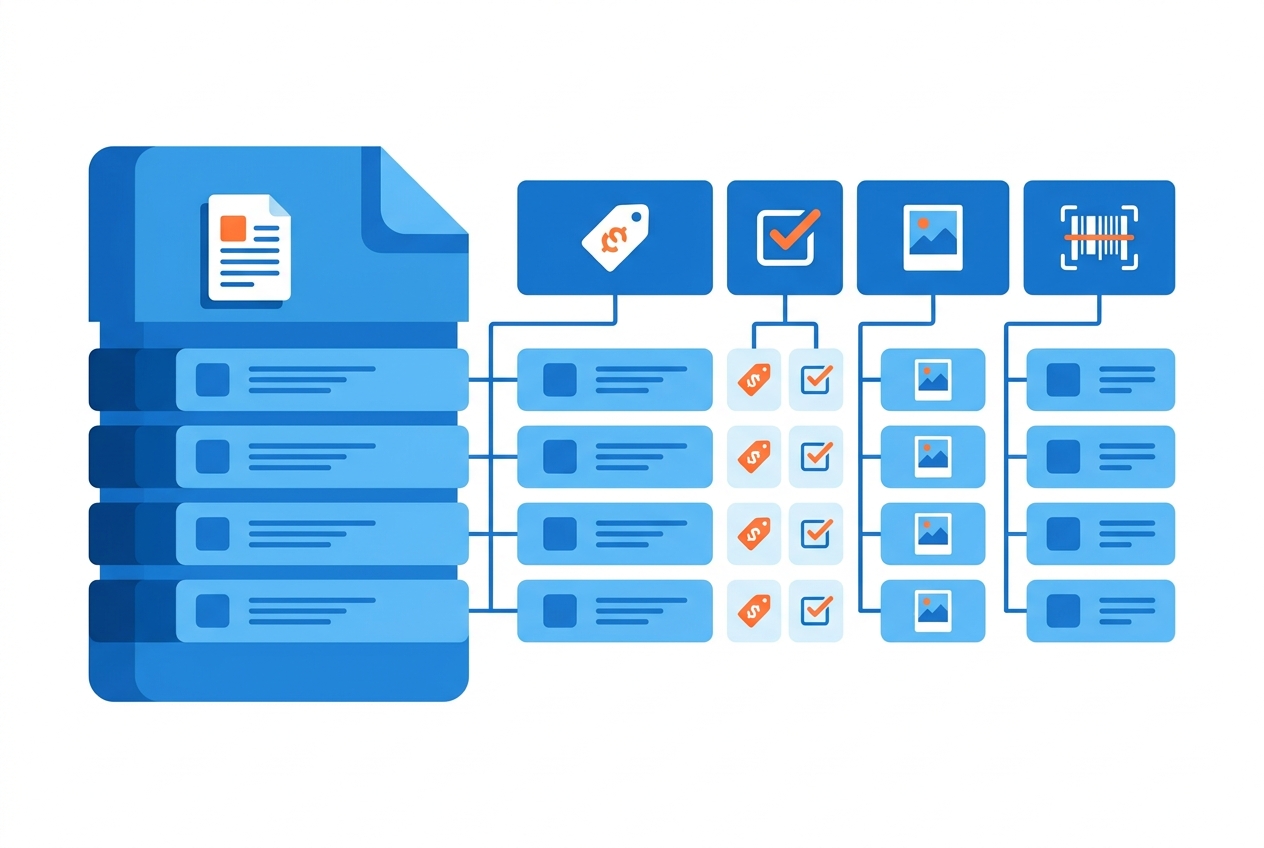
A product feed is a structured file — usually CSV, TSV or XML — that lists every product in your catalog with the attributes a channel needs to display it: title, description, price, availability, image, identifiers and more. You submit it to a channel like Google Merchant Center or a marketplace, the channel reads it, and your products appear in ads and listings. When a price or stock level changes, you refresh the feed and the listings update.
Think of it as the bridge between your catalog and every place you sell. Each channel has its own specification — the exact fields it requires and how they must be formatted — but the core attributes are broadly consistent:
Why product feed optimization matters
Product feed optimization is the practice of improving the data in your feed so your products are approved, matched correctly, and rank well on each channel. It matters because the feed is what the channel actually sees — not your beautiful product page. A thin, error-filled feed produces disapprovals, poor matches and weak placement no matter how much you spend; a complete, accurate one wins impressions, clicks and conversions at the same budget.
The costs of a neglected feed are concrete: products rejected for missing GTINs, listings buried because the title doesn’t match what shoppers search, ad spend wasted on out-of-stock items, and whole categories invisible because they’re mapped wrong. Every one of those is fixable in the feed — which is exactly why optimization is the highest-leverage work in feed marketing.
How to optimize your product feed
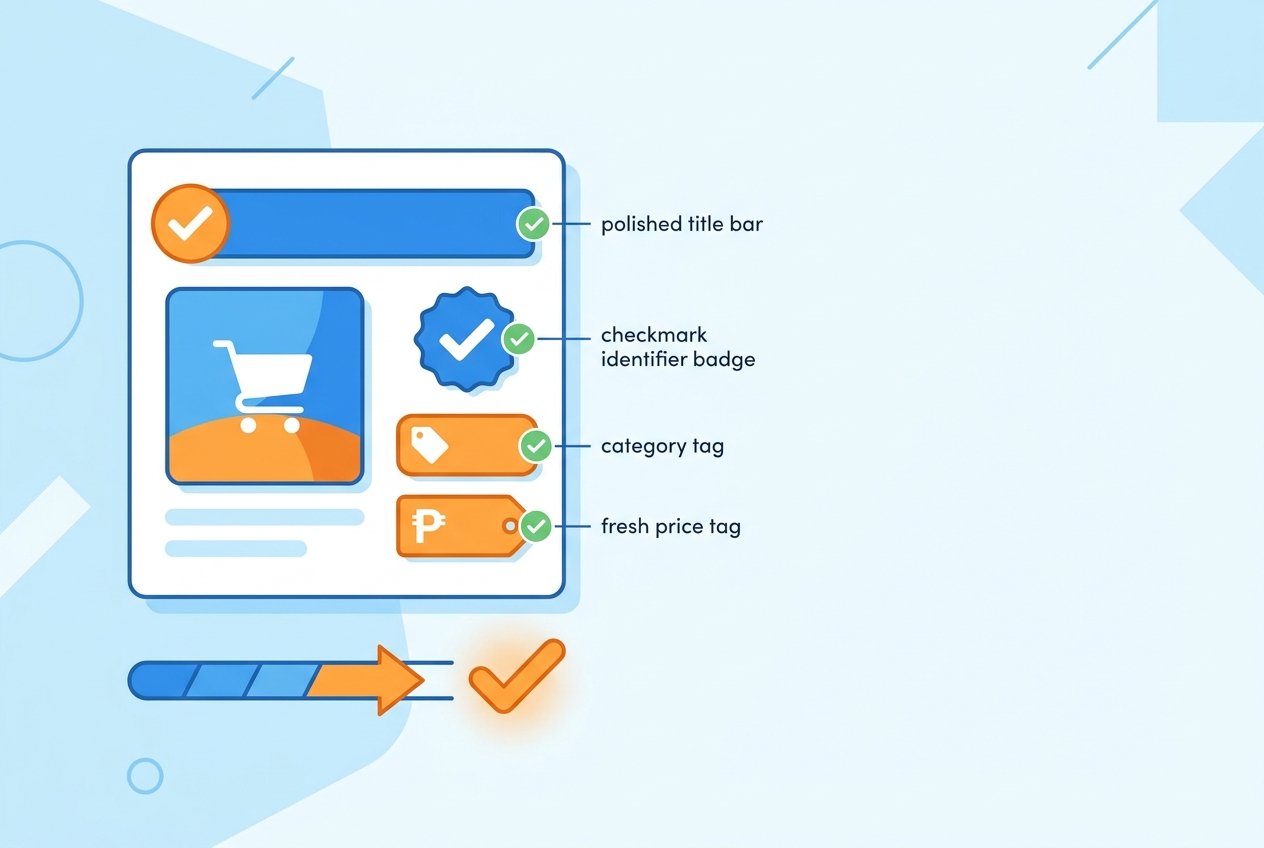
Feed optimization comes down to making every attribute as complete, accurate and channel-ready as possible. The areas that move the needle most:
Where product feeds go: your shopping channels
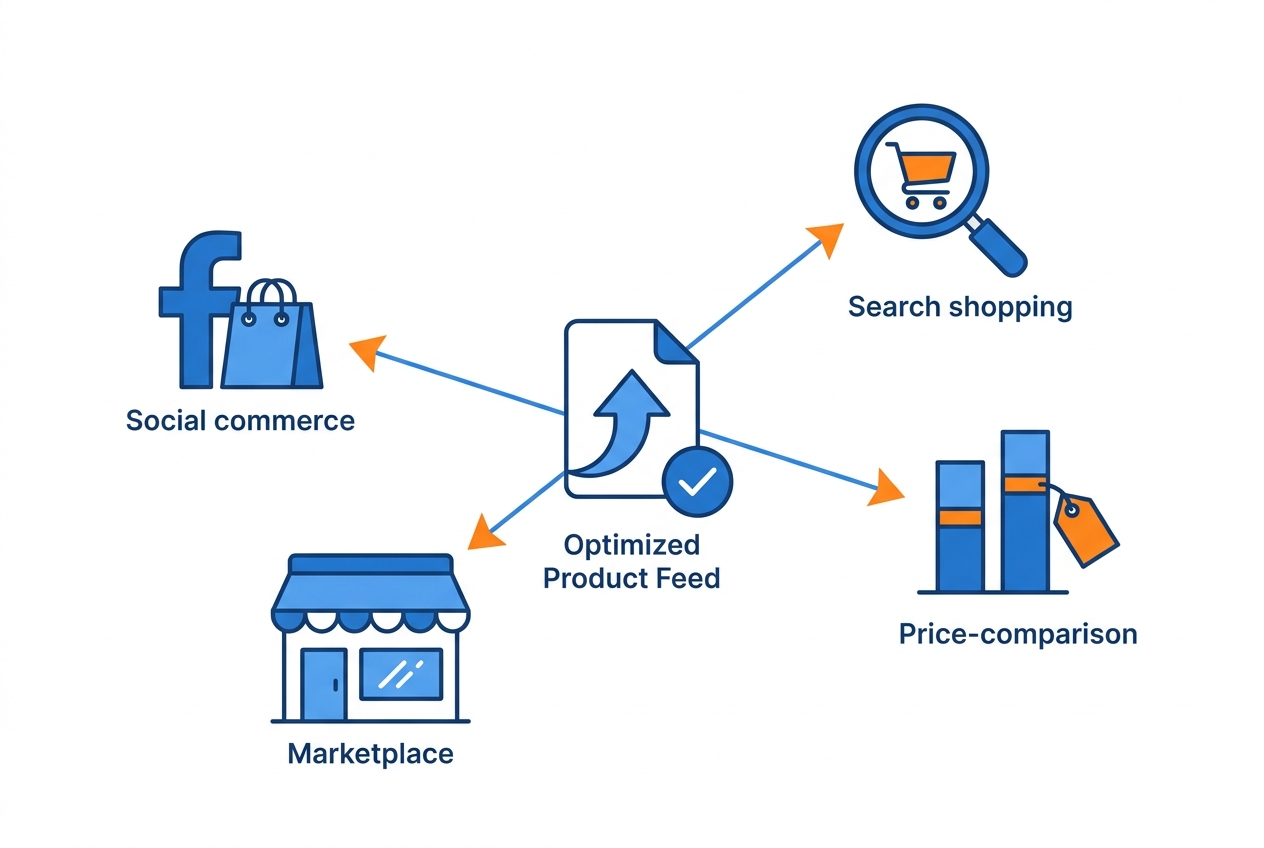
A product feed only earns its keep once it reaches the places shoppers buy. The same optimized feed, mapped to each channel’s spec, powers your presence across:
- Search & shopping — Google Shopping and Microsoft Bing, where the feed drives your Shopping ads and free listings.
- Social commerce — Meta (Facebook & Instagram), TikTok and Pinterest, where the feed builds shoppable catalogs.
- Comparison shopping engines — idealo, PriceRunner and dozens more; see our guide to comparison shopping engines for the leaders in each market.
- Marketplaces — eBay, Bol.com, Fnac and others, where the feed keeps your listings and offers in sync.
Each destination needs the feed in its own format with its own required fields — which is why a single well-structured source feed, mapped out to every channel, beats maintaining a dozen files by hand. Browse the full feed channel library to see the exact spec for each one.
Keeping your feed accurate at scale
Optimizing a feed once is easy; keeping it accurate as your catalog, prices and stock change every day is the real challenge — and where most retailers lose the channel. Doing it by hand doesn’t scale past a few dozen products. The answer is product feed management: map your catalog once, let it validate every product against each channel’s spec, and refresh on a schedule so listings never go stale.
The piece most feed tools miss is price. On Shopping and comparison engines you’re ranked against rivals selling the identical product, so the price in your feed decides whether you win the click. Pairing feed management with real-time price monitoring means the prices flowing into your feed are the ones your repricing rules produce — competitive and current, not a stale export. That’s the difference between a feed that’s merely accurate and one that actually sells.
Frequently asked questions
What is a product feed?
A product feed is a structured file (CSV, TSV or XML) listing your products with the attributes a channel needs — title, description, price, availability, image and identifiers — that you submit to channels like Google Shopping, Meta or marketplaces so your products appear in their ads and listings.
What is product feed optimization?
Product feed optimization is improving the data in your feed — titles, images, identifiers, categories and completeness — so your products are approved, matched correctly and rank well on each channel, winning more impressions and clicks at the same spend.
What format should a product feed be in?
Most channels accept CSV, TSV or XML. The right format depends on the destination — Google, for example, accepts XML and tab-delimited text — and good feed software generates whichever each channel requires and validates it before sending.
What are the most important product feed attributes?
The core required attributes are id, title, description, link, image_link, price and availability, plus product identifiers (GTIN, brand, MPN) and an accurate category. Completing the recommended attributes on top of the required ones is what drives better matching and ranking.
How often should I update my product feed?
Keep price and availability current — daily or intraday for fast-moving catalogs — so you never advertise a stale price or an out-of-stock product. Automated feed management refreshes on a schedule with your latest prices and stock.
A great product feed is the quiet engine behind every profitable shopping channel. When you’re ready to optimize yours once and keep it accurate everywhere you sell, product feed management with pricing built in is what turns a catalog into a channel that pays.


