 Paul Morello
Product feed management software takes your product catalog and turns it into the validated, always-current feeds that Google Shopping, marketplaces, comparison engines and social channels demand — mapped to each channel’s spec, refreshed on schedule, without spreadsheet surgery. The category has matured fast, and the platforms differ more than their homepages suggest: some are self-serve rule engines, some are managed services, some are really marketplace integrators wearing a feed badge. After fifteen years of running product data through most of them, here’s my honest read on the best product feed management tools in 2026 — who each one actually fits, and how to choose.
What you’ll find in this guide
- The 10 best feed management tools at a glance
- The tools, reviewed
- How to choose feed management software
- Frequently asked questions
The 10 best feed management tools at a glance
The tools, reviewed
1. Pricefy
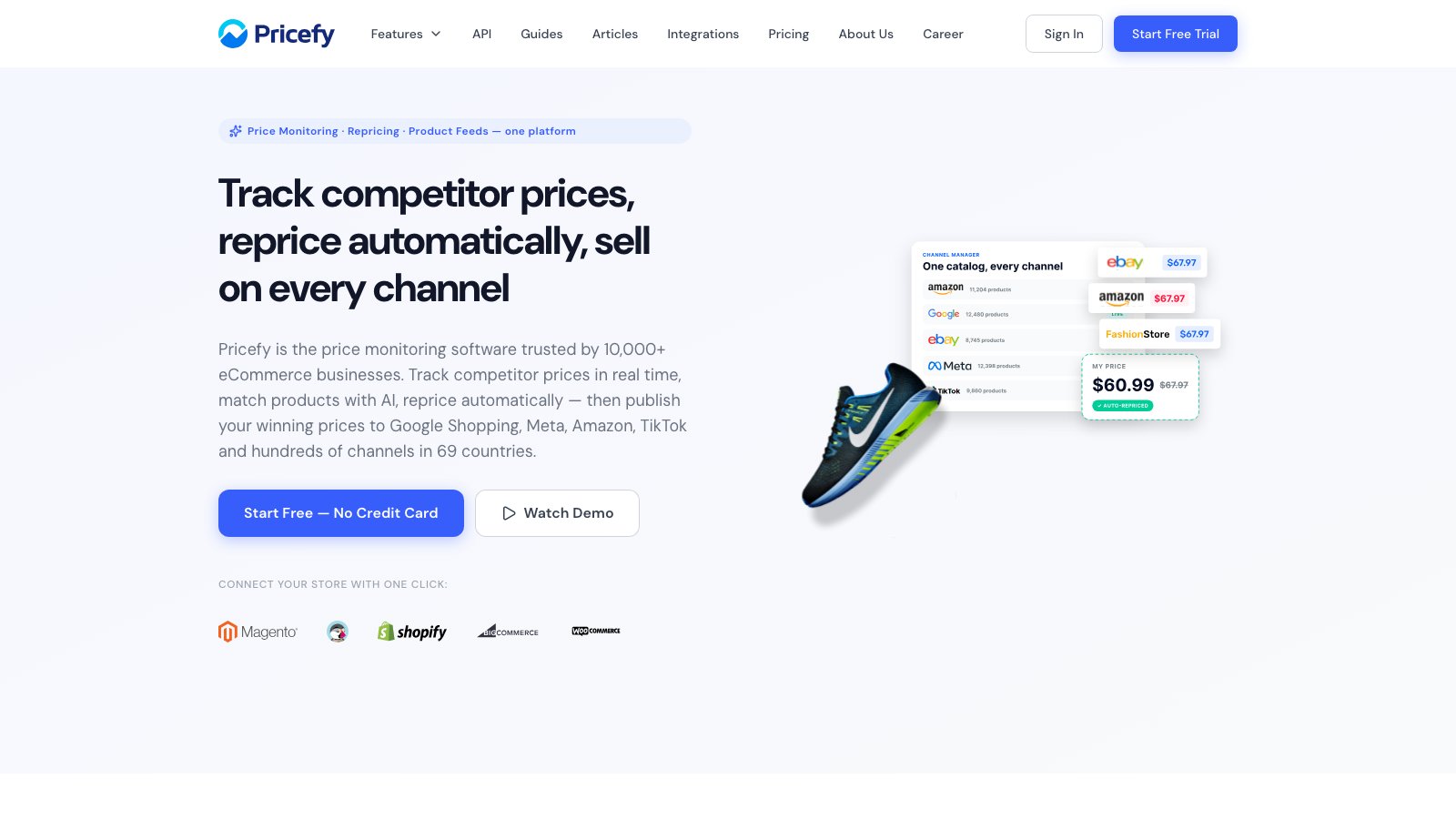
Pricefy approaches feeds from the angle the rest of the category ignores: the price inside the feed. It maps your catalog to 1,500+ channel–country templates across 69 countries — Google Shopping to idealo to eBay — validates every product against the channel’s spec, and refreshes on schedule. The difference is what flows through: competitor price monitoring comes on every plan, and from Pro up, dynamic repricing publishes your adjusted prices straight into the feeds. On channels that rank offers by price, that’s the whole game. It connects natively to Shopify, WooCommerce and Magento — no plugin or extension to install. There’s a free plan, so trying it costs nothing but an afternoon.
2. Channable
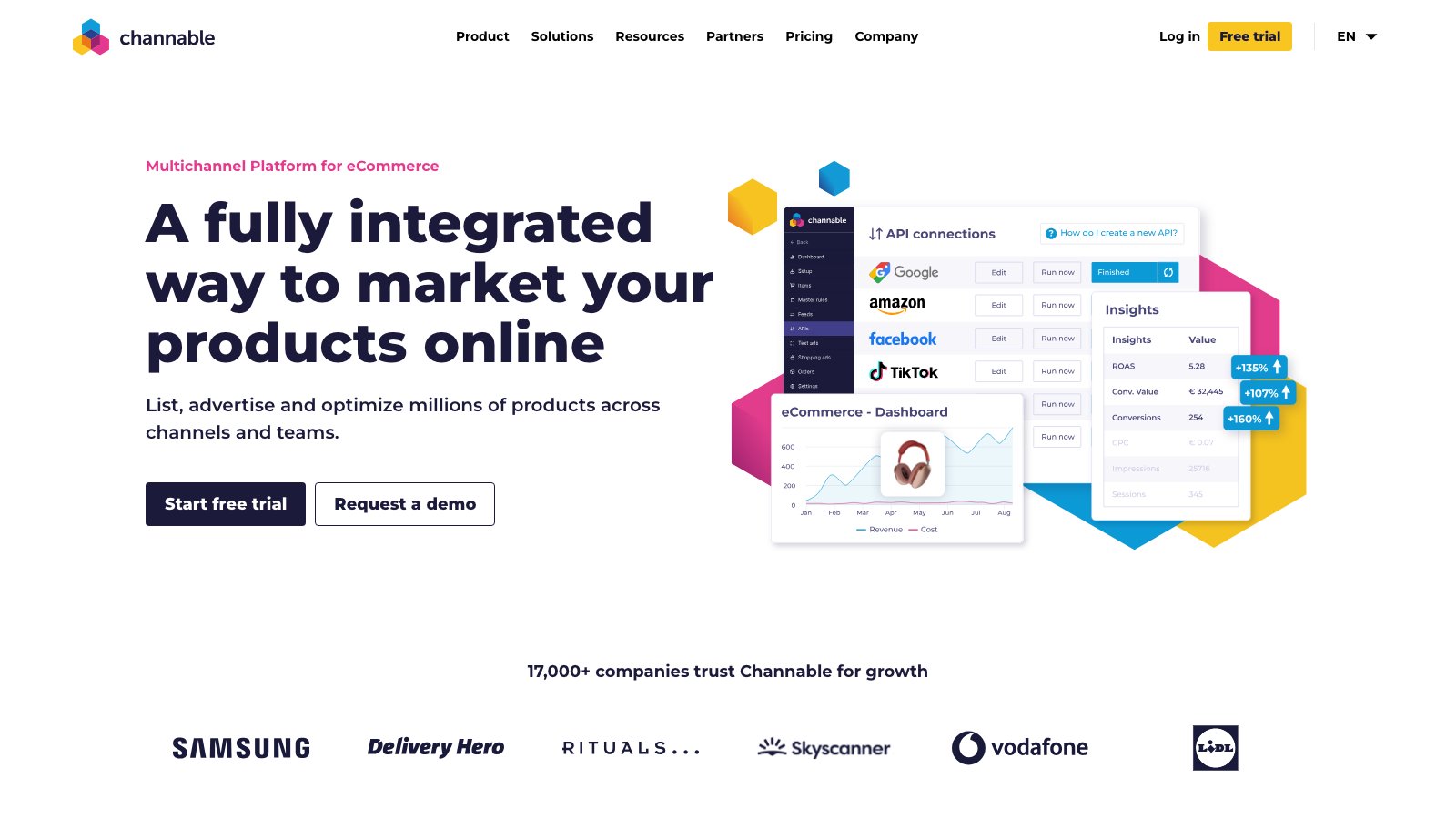
The Dutch all-rounder and the category’s best-known name in Europe. Channable pairs a solid rule-based feed engine with marketplace connections and PPC automation (generating search ads from your product data), which makes it attractive for agencies running both feeds and ads. Where Pricefy leads with pricing intelligence, Channable leads with ad tooling — see our full Channable vs Pricefy comparison.
3. DataFeedWatch
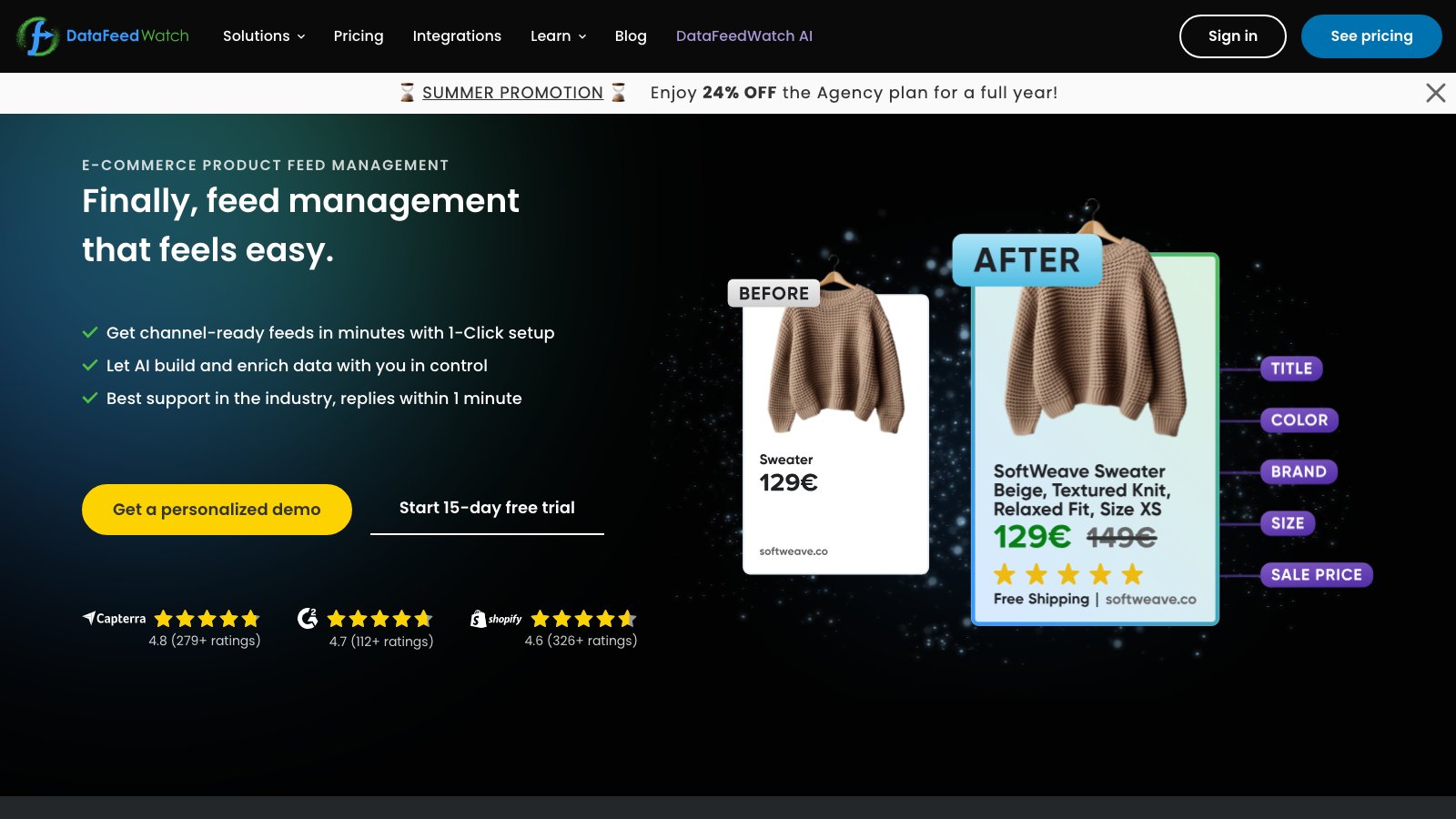
Now part of Cart.com, DataFeedWatch is the feed optimizer’s toolkit: granular mapping, conditional rules, A/B-friendly workflows and a big channel library, backed by unusually good documentation. It’s a favourite with agencies managing many accounts. Pricing scales by SKUs and channels — the details versus us are in the DataFeedWatch vs Pricefy comparison.
4. Feedonomics
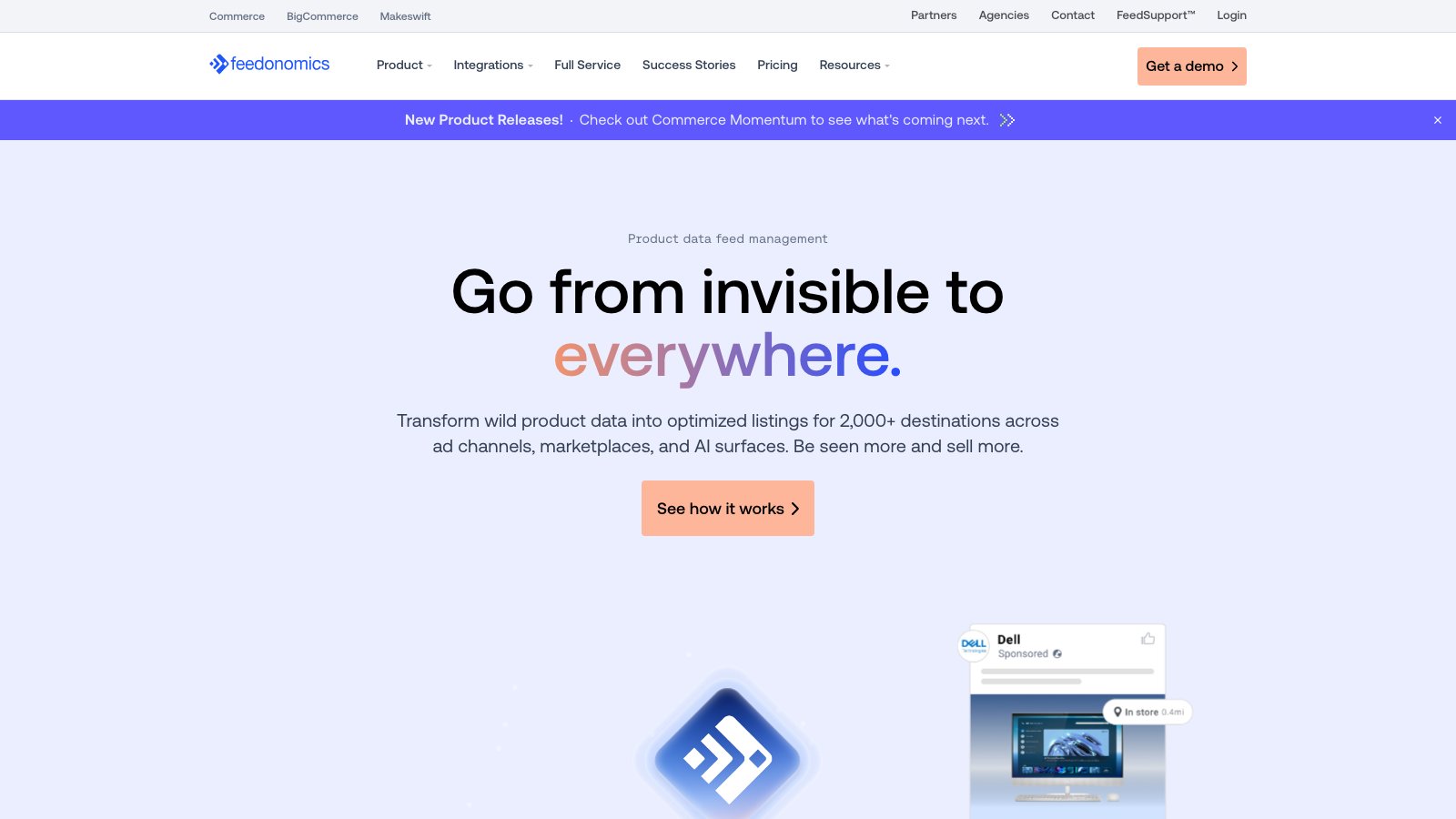
The “don’t make me touch the feed” option. Feedonomics (owned by BigCommerce) is a managed service: their teams build, optimize and monitor your feeds around the clock. Enterprises with complex catalogs and no appetite for self-serve tooling pay for exactly that. Budget accordingly — it’s custom-priced — and compare the trade-offs in our Feedonomics vs Pricefy comparison.
5. Productsup
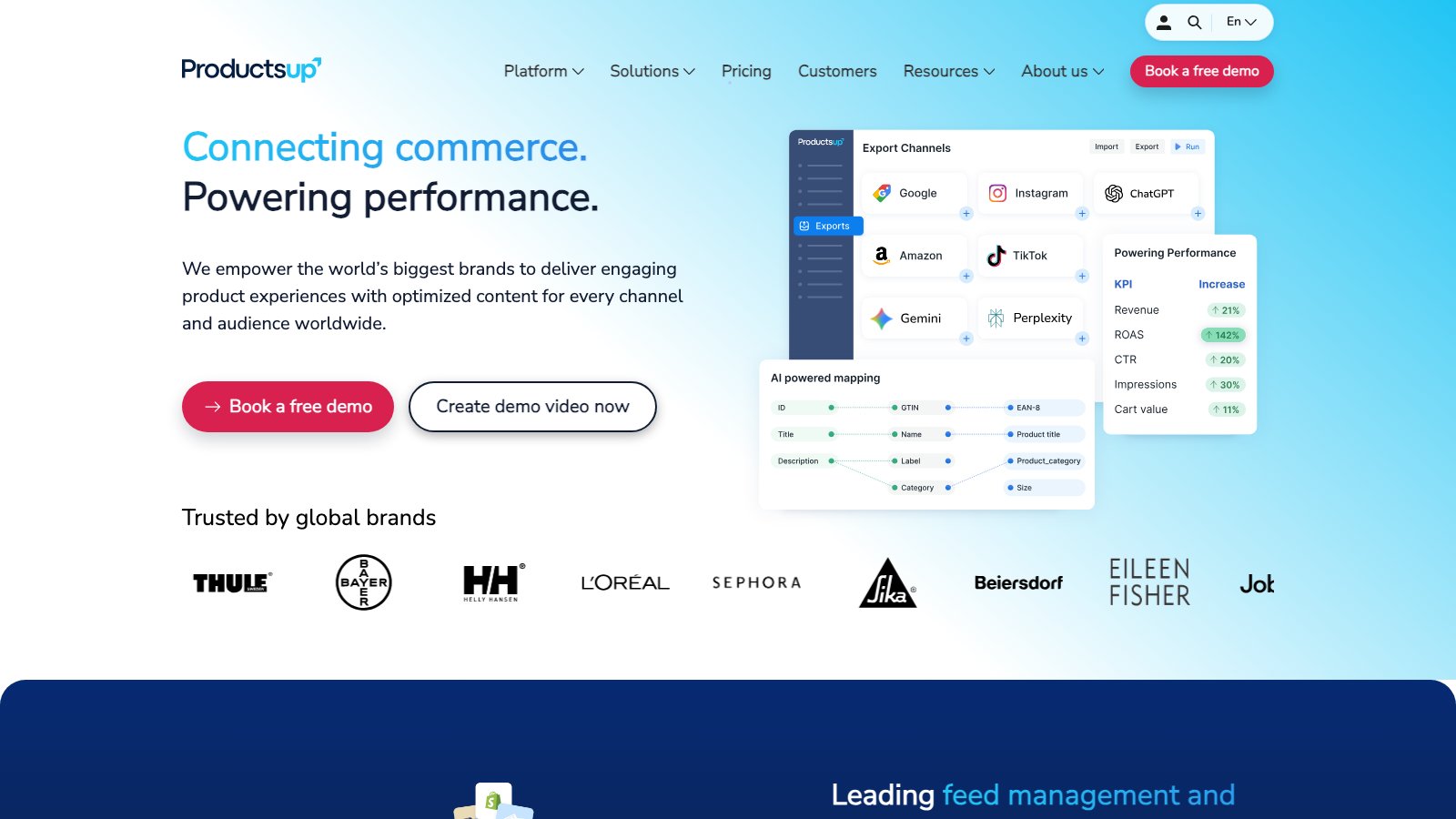
Enterprise product-to-consumer platform: feeds, product content syndication to retailers, and retail-media use cases at very large scale. If you’re a brand pushing product data to hundreds of endpoints — not just ad channels — it belongs on your shortlist.
6. GoDataFeed
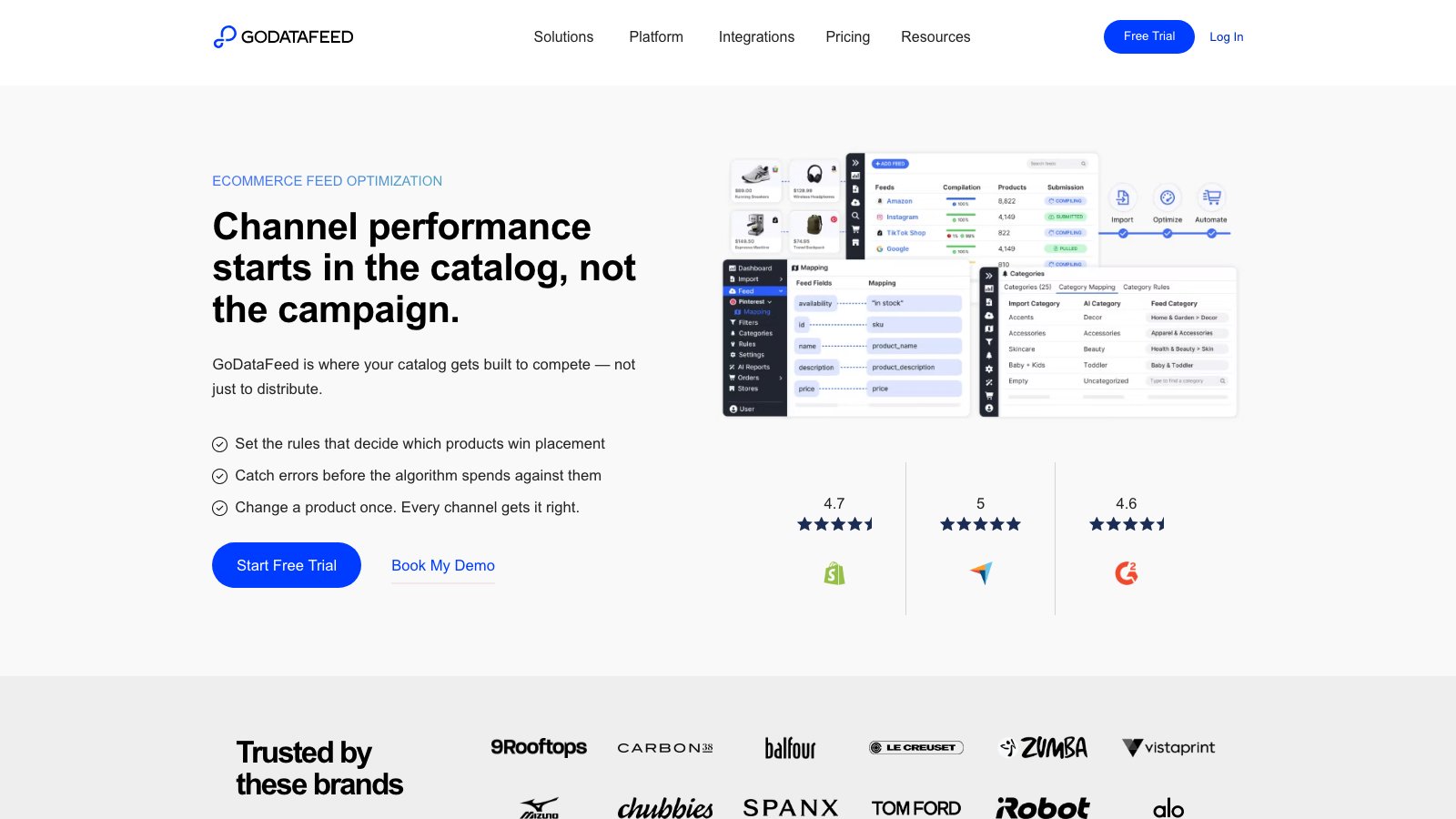
A pragmatic, US-centric choice for small and mid-size merchants: the core feed jobs done well, without enterprise complexity or enterprise pricing. Less powerful rules than the leaders, but often exactly enough.
7. Lengow

French platform with deep roots in Southern-European marketplaces and comparison engines. If your growth map says France, Spain and Italy, Lengow’s channel coverage there is a genuine asset.
8. ChannelEngine
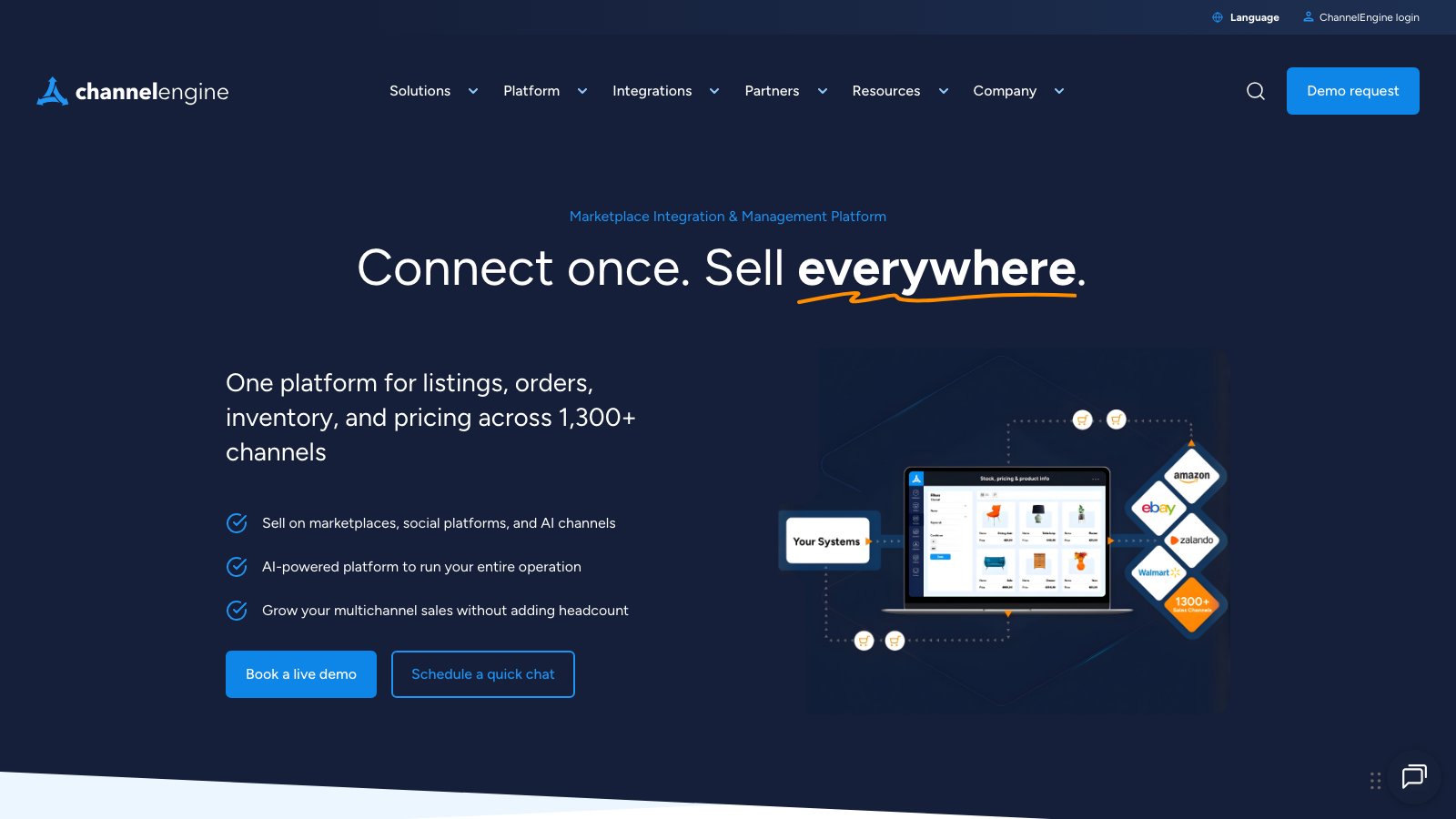
Really a marketplace integrator more than a feed tool: beyond product data, it syncs orders, stock and fulfilment with marketplaces. If marketplaces are your primary channel and you need two-way integration, that’s the job it’s built for — heavier than a feed-only platform, priced like it.
9. Rithum
The former ChannelAdvisor + CommerceHub, rebranded. An enterprise commerce network spanning feeds, marketplace management and retail media. Powerful if you want one vendor across all of it; oversized if you just need clean feeds.
10. Simprosys Google Shopping Feed

The Shopify app answer. If your stack is Shopify and your channel is Google, Simprosys does that one narrow job reliably for a few dollars a month. You’ll outgrow it the day you add a second channel or need pricing logic — but as a starting point it’s honest value.
How to choose feed management software
Five questions separate the right tool from an expensive mistake:
- Does it cover your channels — in your countries? A tool that’s brilliant on Google but thin on idealo, Heureka or your local marketplaces will bottleneck your expansion. Check the actual channel list against your roadmap.
- How good are the mapping rules and validation? The daily work is fixing titles, categories and identifiers in bulk. Weak rules mean manual cleanup forever — this is where feed optimization lives or dies.
- How fresh is the data? Prices and stock change hourly; feeds that refresh daily-at-best get products disapproved for price mismatch in Merchant Center. Ask about refresh frequency at your plan level, not the top one.
- Does the price in the feed come from anywhere intelligent? Most tools export whatever price sits in your store. If you compete on shopping channels, you want monitoring and repricing feeding that number — otherwise you’re advertising yesterday’s decision.
- What does it cost at your SKU and channel count? Every vendor’s pricing bends with volume. Model your real catalog before you commit, and re-model at 2× — the tool you can afford at launch should still make sense when it works.
Frequently asked questions
What is product feed management software?
Software that converts your catalog into the specific feed each sales channel requires — mapping fields, fixing data with rules, validating against the channel’s spec, and refreshing prices and stock on schedule — so you can sell on many channels from one source of truth.
Do I need feed management software, or is Merchant Center enough?
For one channel and a small, clean catalog, a platform integration or Merchant Center’s own tools can carry you. The software earns its keep when you add channels, when your catalog needs bulk fixing, or when stale prices start costing you disapprovals and margin.
What’s the best free product feed management tool?
Pricefy’s free plan is the most complete way to start — real feed templates with competitor monitoring included, not a stripped demo. Platform-native apps (like Shopify’s Google channel) are also free for the single-channel basics.
What’s the difference between a feed tool and a marketplace integrator?
A feed tool ships product data to channels; an integrator (ChannelEngine, Rithum) also syncs orders, stock and fulfilment back. Integrators do more and cost more — pay for the round trip only if you need it.
The honest summary: match the tool to the job. Enterprises that want hands-off feeds have Feedonomics; ad-heavy agencies have Channable and DataFeedWatch; and if your feeds should carry prices that win the click, that’s the corner we built Pricefy for — start on the free plan and see what your feed looks like with intelligence in it.


